


Introduction
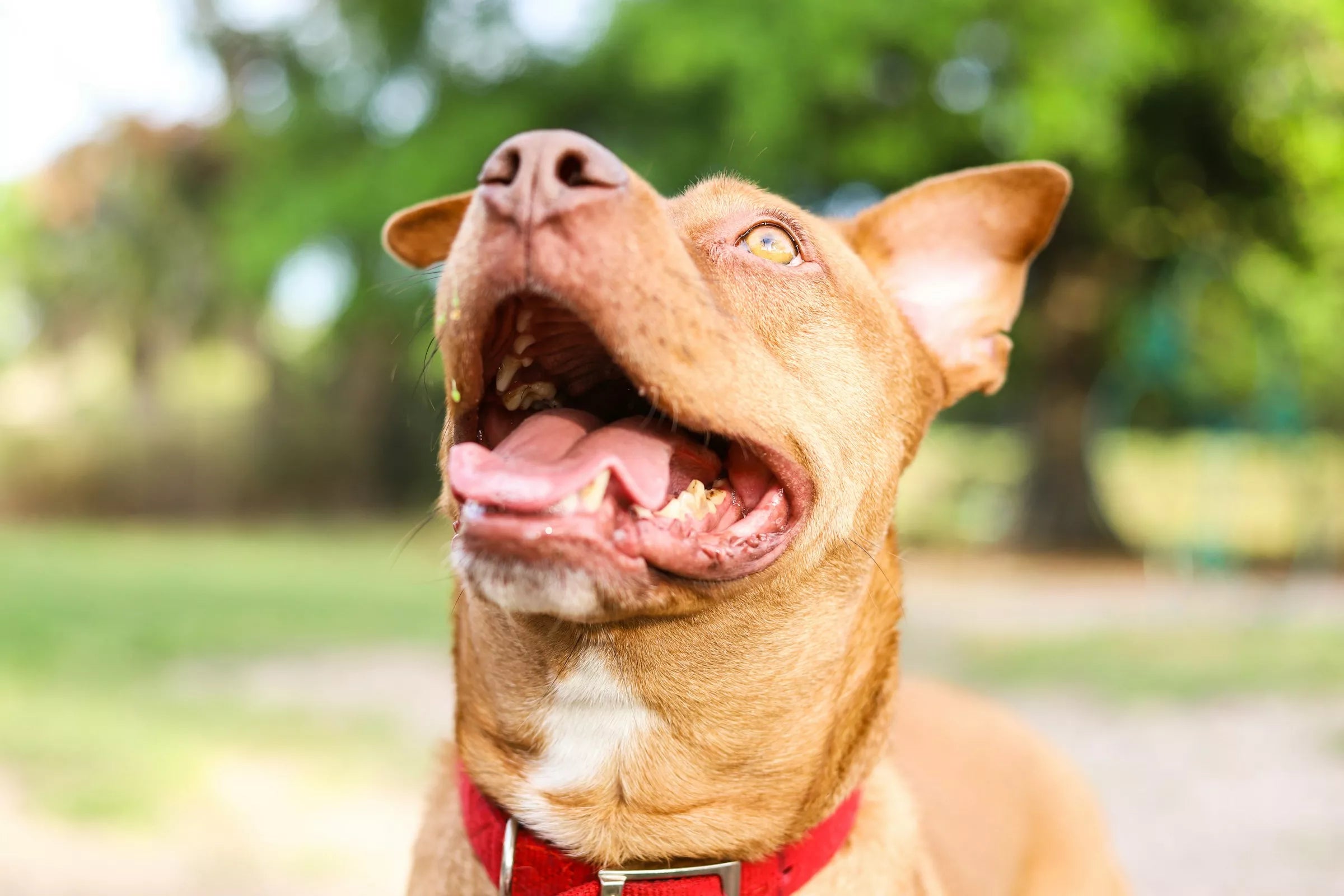
Most dog owners have felt it: you’re anxious, overwhelmed, or tense — and suddenly your dog seems unsettled too. They pace more. They stick closer. They struggle to settle.
This isn’t coincidence, and it isn’t your imagination. Science now confirms that dogs can smell human stress — and that detection can directly influence their behaviour.
Understanding this connection helps us show up better for our dogs, especially during stressful seasons of life.
How Dogs Smell Human Stress
 When humans experience stress, the body releases hormones such as cortisol and adrenaline. These hormonal changes alter the chemical composition of our sweat and breath — even if we appear calm on the outside.
Dogs possess up to 300 million olfactory receptors (humans have around six million). This allows them to detect minute chemical changes that are completely invisible to us.
To a dog, stress isn’t abstract. It’s a smell.
That means your dog doesn’t need raised voices or frantic movement to sense something is off — your body chemistry tells the story for you.
What Science Says About Dogs and Stress
A landmark 2021 study published in Scientific Reports tested whether dogs could differentiate between human scent samples taken before and after a stressful task.
The result? Dogs correctly identified stress-related samples with remarkable accuracy — without seeing the person or receiving any behavioural cues.
This study confirmed something dog owners have long suspected: dogs detect emotional changes chemically, not just visually or audibly.
In other words, even if you’re “holding it together,” your dog knows.
How Your Stress Affects Your Dog’s Behaviour
 When dogs detect stress in their primary caregiver, they may respond in several ways:
- Increased clinginess or following behaviour
- Difficulty settling or relaxing
- Heightened alertness or reactivity
- Reduced focus during training or walks
- Changes in sleep patterns
These responses aren’t disobedience or attention-seeking. They’re emotional alignment.
Dogs are social animals evolved to attune closely to their group. When a key member of that group feels unsettled, dogs instinctively adjust.
Why Dogs React So Strongly
From an evolutionary perspective, detecting stress in others was a survival advantage. For early dogs and wolves, tension within the group often meant danger was nearby.
Modern dogs may no longer hunt in packs, but their brains are still wired for emotional sensitivity.
This is also why dogs often act as emotional anchors for humans. The same bond that allows them to absorb stress also enables them to offer comfort — something explored further in our blog on why dogs make us feel calm.
What You Can Do to Support Your Dog
You don’t need to eliminate stress entirely — that’s unrealistic. What matters is how predictable and safe your dog’s world feels around it.
Helpful steps include:
- Maintaining consistent routines, even on busy days
- Using calm, steady tones when speaking
- Providing a quiet, comfortable rest space
- Keeping walks structured and familiar
- Allowing your dog space to settle without pressure
Small signals of stability go a long way.
Supporting your own wellbeing also matters. When you regulate yourself, your dog benefits too — a shared calm rather than a shared stress.
FAQs
Can dogs smell anxiety specifically?
Yes. Anxiety produces hormonal and chemical changes that dogs can detect through scent.
Does my stress make my dog anxious?
It can. Dogs often mirror the emotional state of their primary caregiver, especially in close bonds.
Can dogs help reduce human stress?
Absolutely. Interaction with dogs has been shown to lower cortisol and increase oxytocin in humans.
Should I avoid my dog when I’m stressed?
No. Calm, gentle presence is usually reassuring for dogs. Avoid erratic behaviour, not connection.
Is this why my dog acts differently during busy periods?
Yes. Changes in routine combined with elevated human stress can affect a dog’s emotional balance.


Share:
Top 7 Foods Every Dog Should Eat
Dogs Have a Built-In Lie Detector