


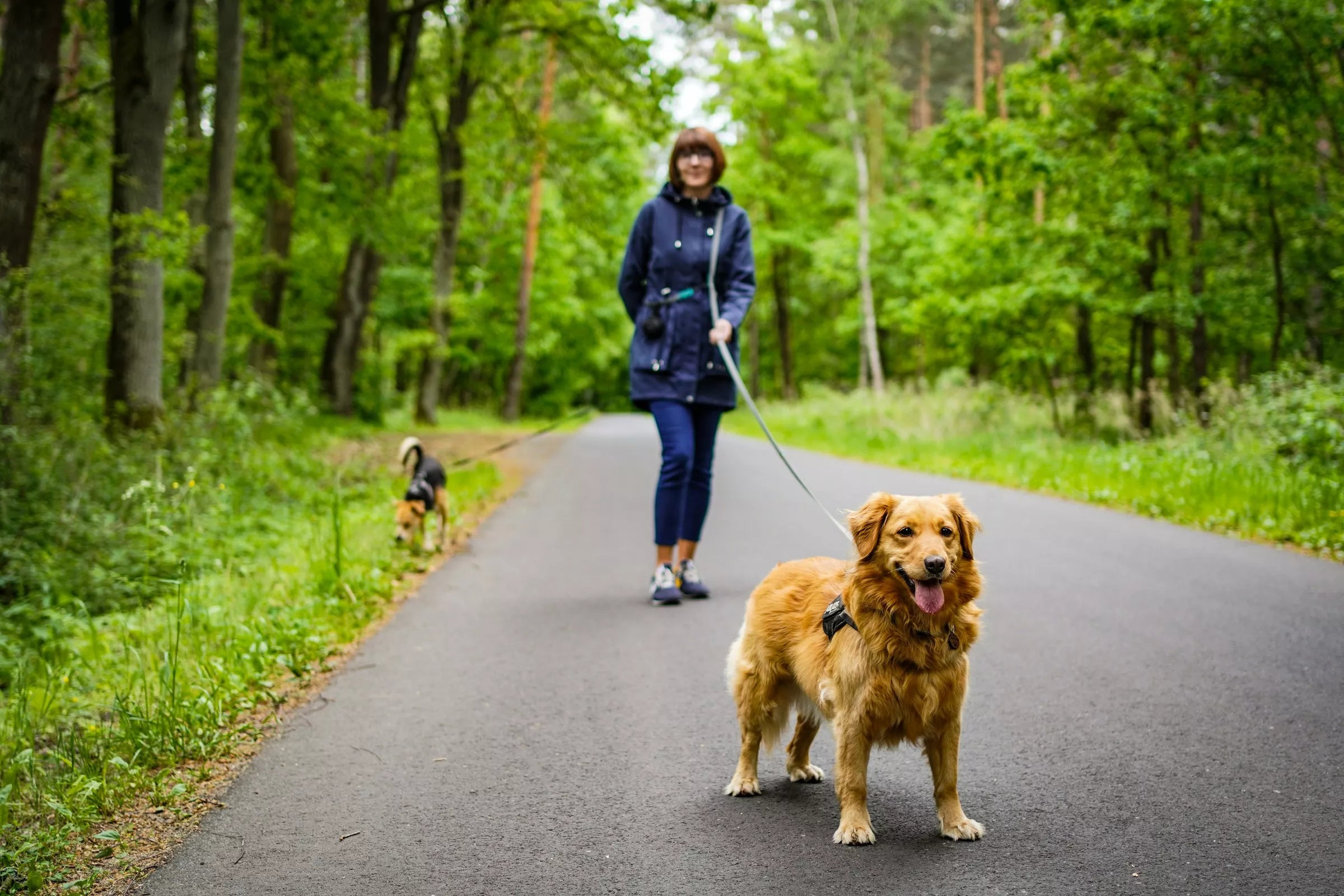
Best Walking Surfaces for Dogs
Most dog owners think about how far they walk their dog.
Far fewer think about what surface they're walking on.
But the ground beneath your dog's paws can have a surprisingly large impact on:
- Joint health
- Paw condition
- Muscle development
- Balance and coordination
- Mental stimulation
- Long-term mobility
Just as humans feel the difference between walking on concrete, grass, sand, or woodland trails, dogs experience these surfaces differently too.
The best walking routine often includes a variety of surfaces rather than relying on just one.
Quick Answer: What Is the Best Walking Surface for Dogs?
Grass is generally considered one of the best walking surfaces for most dogs.
It provides natural cushioning, good traction, and relatively low impact on joints.
However, a mix of surfaces—including woodland trails, dirt paths, and occasional sand—often provides the greatest physical and mental benefits.
| Surface | Paw Health | Joint Impact | Mental Enrichment | Overall Rating |
|---|---|---|---|---|
| Grass | Excellent | Excellent | Good | ⭐⭐⭐⭐⭐ |
| Woodland Trails | Excellent | Excellent | Excellent | ⭐⭐⭐⭐⭐ |
| Dirt Paths | Very Good | Very Good | Very Good | ⭐⭐⭐⭐⭐ |
| Sand | Good | Very Good | Excellent | ⭐⭐⭐⭐ |
| Pavement | Moderate | Moderate | Low | ⭐⭐⭐ |
| Hot Asphalt | Poor | Poor | Low | ⭐ |
Jump to Section
- Why grass is ideal
- Benefits of woodland trails
- Are dirt paths good for dogs?
- Walking on sand
- Is pavement bad for dogs?
- The dangers of hot asphalt
- Best surfaces for dogs with joint problems
- Don't forget your own feet
- Related guides
- FAQs
Why Grass Is One of the Best Surfaces for Dogs

If you could choose just one walking surface for most dogs, grass would be near the top of the list.
Grass provides:
- Natural shock absorption
- Good grip
- Reduced impact on joints
- Comfortable footing
- Plenty of scent opportunities
This makes grassy walks especially beneficial for:
- Puppies
- Senior dogs
- Large breeds
- Dogs recovering from injury
- Dogs with arthritis
Many dogs also naturally spend more time sniffing when walking through grassy environments.
Read: Why Sniffing Is More Important Than Walking
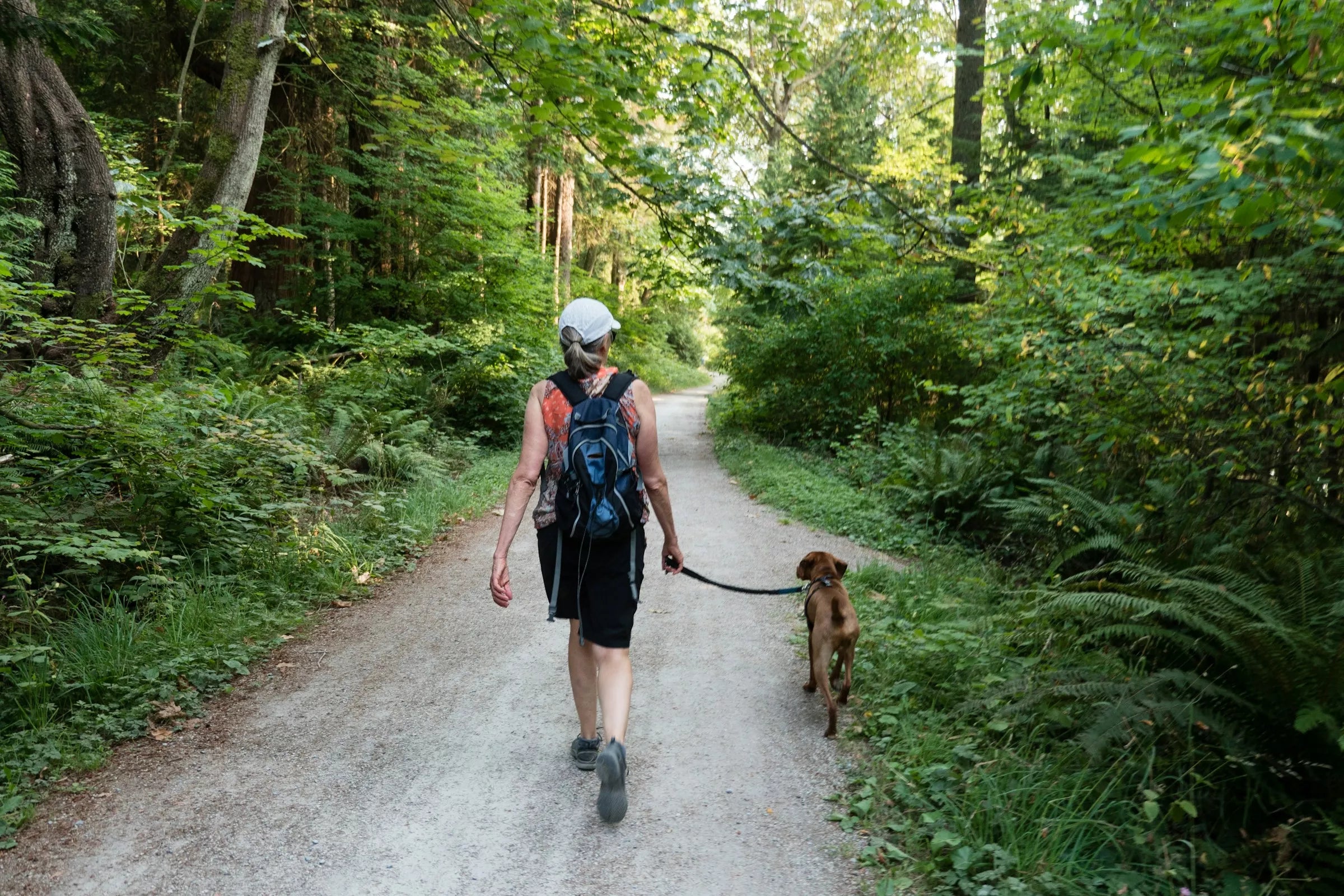
Woodland Trails: Nature's Perfect Dog Gym
Woodland trails offer something that many urban walks lack:
Variety.
Roots, leaves, gentle slopes, soft ground, scents, and changing terrain all challenge a dog's body and brain.
Benefits include:
- Improved balance
- Better coordination
- Greater mental stimulation
- Natural enrichment
- Reduced repetitive impact
Many behaviourists consider woodland walks among the most enriching experiences dogs can have.
The constant flow of smells also allows dogs to engage their strongest sense—their nose.
Are Dirt Paths Good for Dogs?

Absolutely.
Dirt trails often provide an excellent balance between stability and softness.
Compared to pavement, dirt typically:
- Creates less joint impact
- Offers better traction
- Feels more natural underfoot
- Contains richer scent information
This is one reason hiking trails are often excellent environments for active dogs.
Pairing varied terrain with a properly fitted harness can make longer adventures safer and more comfortable.
Is Walking on Sand Good for Dogs?
Sand can be fantastic in moderation.
Walking on sand requires more effort than walking on firmer surfaces, which can help develop:
- Muscle strength
- Balance
- Coordination
- Cardiovascular fitness
However, there are a few caveats.
| Benefit | Potential Drawback |
|---|---|
| Low-impact surface | Can be tiring for older dogs |
| Excellent enrichment | May irritate sensitive paws |
| Builds strength | Can increase fatigue |
As with humans, moderation is key.
Is Pavement Bad for Dogs?

Not necessarily.
Pavement is a normal part of life for many dogs.
But it does come with some drawbacks.
Compared to natural surfaces, pavement:
- Creates more impact on joints
- Offers less scent enrichment
- Can become extremely hot in summer
- Provides little variation in terrain
Occasional pavement walking is completely fine for most healthy dogs.
The issue arises when it becomes the only surface a dog experiences.
Whenever possible, mixing in parks, trails, fields, and woodland areas creates a more balanced routine.
The Dangers of Hot Asphalt
This is one of the most important things dog owners should know.
Asphalt can become significantly hotter than the surrounding air temperature.
| Air Temperature | Potential Asphalt Temperature |
|---|---|
| 25°C (77°F) | 50°C+ (122°F) |
| 30°C (86°F) | 60°C+ (140°F) |
| 35°C (95°F) | 70°C+ (158°F) |
At these temperatures, paw burns can occur surprisingly quickly.
A simple rule:
If it's too hot for the back of your hand, it's probably too hot for your dog's paws.
Best Walking Surfaces for Dogs with Joint Problems
For dogs dealing with arthritis, hip dysplasia, or age-related stiffness, softer surfaces are generally preferable.
| Surface | Joint Friendliness |
|---|---|
| Grass | Excellent |
| Woodland Trails | Excellent |
| Dirt Paths | Very Good |
| Sand | Good in moderation |
| Pavement | Moderate |
| Concrete | Lower |
If your dog is showing signs of discomfort, it's worth reviewing not only walk length but also the surfaces they're regularly walking on.
Read: Signs of Joint Pain in Dogs
Don't Forget Your Own Feet
Long walks aren't just about your dog.
Owners who spend hours on trails, parks, beaches, and woodland paths benefit from proper footwear too.
Good walking shoes can improve comfort, reduce fatigue, and make daily adventures more enjoyable.
Whether you're exploring muddy woodland trails or spending hours at the park, durable dog-walking footwear can make a surprising difference.
Many dog owners find that easy-clean, slip-on footwear becomes one of the most-used items in their walking routine, such as the Canine Clogs.
Why Variety Is Better Than One Surface
Dogs evolved to move across varied terrain.
Different surfaces challenge different muscles, joints, and senses.
A healthy weekly routine might include:
- Grass fields
- Woodland trails
- Dirt paths
- Beach walks
- Neighbourhood pavement walks
This combination often provides the best balance of physical exercise, mental stimulation, and environmental enrichment.
Related Guides
- Why Short Walks Can Be Better Than Long Ones
- Why Sniffing Is More Important Than Walking
- Signs of Joint Pain in Dogs
- Can Pulling Damage a Dog's Shoulders?
- Dog Harness Size Guide
- Dog Chest Size Chart
Conclusion
When it comes to dog walking, distance isn't the only thing that matters.
The surface under your dog's paws plays a major role in comfort, enrichment, and long-term health.
For most dogs, grass, woodland trails, and natural dirt paths provide the best overall experience.
Mixing surfaces throughout the week can help build stronger bodies, healthier paws, and more stimulating walks.
And while you're taking care of your dog's comfort, don't forget your own—because great adventures are better when both ends of the lead are happy.
FAQs
What is the best surface for walking dogs?
Grass is often considered one of the best surfaces because it provides cushioning, traction, and natural enrichment.
Is pavement bad for dogs?
Pavement is generally safe in moderation, but it offers less cushioning and can become dangerously hot during warm weather.
Is sand good for dogs?
Yes. Sand can help build strength and provide excellent enrichment, although it can be tiring if overdone.
What surface is best for dogs with arthritis?
Grass, dirt paths, and woodland trails are typically more comfortable for dogs with joint issues than concrete or pavement.
Can walking surfaces affect joint health?
Yes. Hard surfaces create greater impact forces, while softer natural surfaces generally place less stress on joints.
How often should dogs walk on different surfaces?
A mix of surfaces throughout the week is usually ideal, providing both physical and mental benefits.


Share:
Can Dogs Recognise Themselves? (What Science Says)
Should Older Dogs Use Stairs? (A Guide for Senior Dogs)