


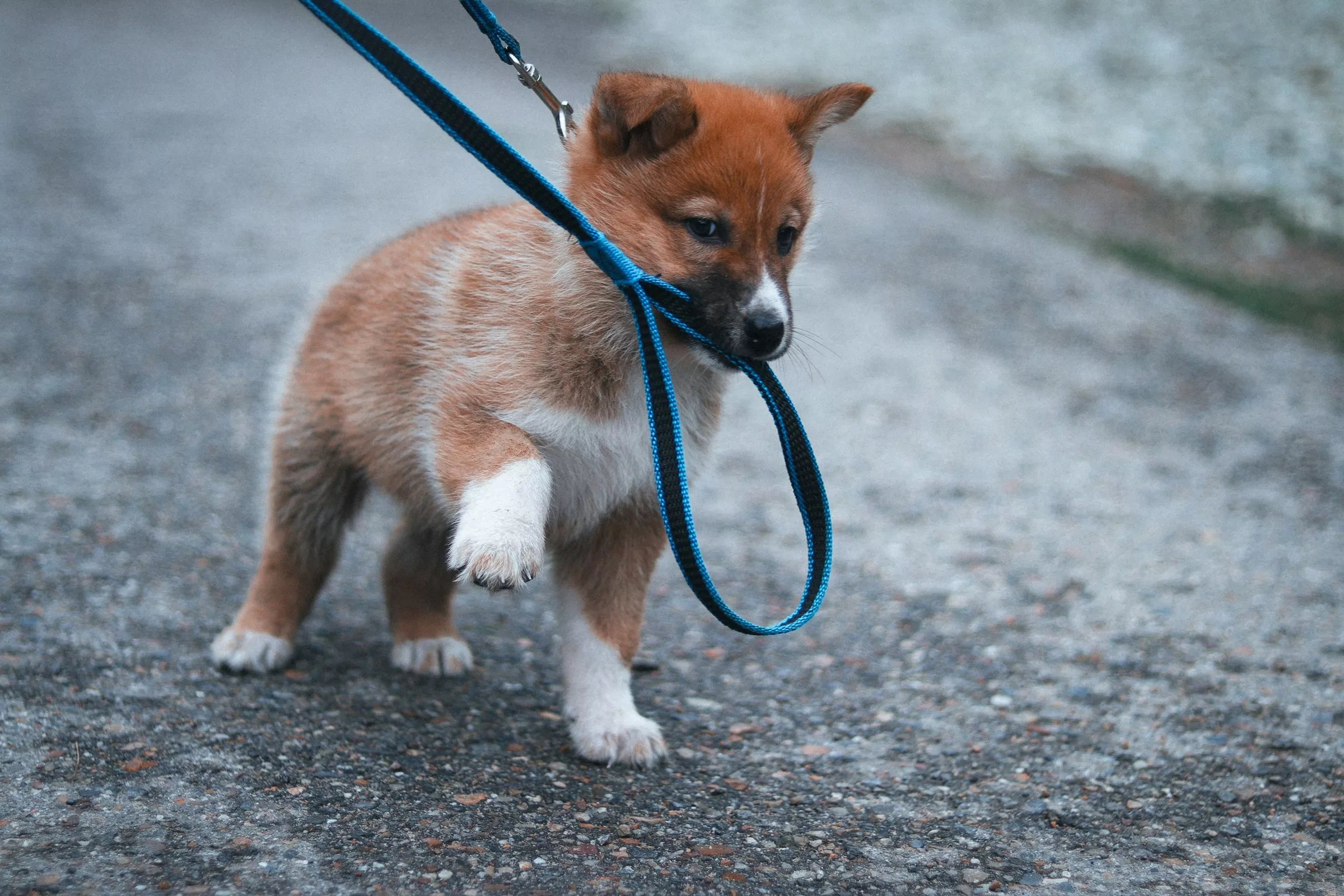
Can Pulling Damage Shoulders?
If your dog pulls on walks, you’ve probably wondered:
Can pulling actually damage their shoulders?
It’s a fair question — especially if your dog regularly lunges, pulls hard on the lead, or wears a harness that seems to sit close to the shoulder joints.
The short answer?
Potentially, yes — repetitive pulling and poorly fitted walking gear may contribute to discomfort or movement restriction over time.
However, it is usually not the pulling alone that matters. Fit, pressure distribution, freedom of movement, training, and equipment choice all play an important role.
Quick Answer
Pulling can potentially contribute to shoulder strain or discomfort in dogs, particularly when paired with poorly fitted or restrictive walking gear.
Harnesses that restrict natural shoulder movement or concentrate pressure in the wrong areas may increase discomfort during repeated pulling.
Many owners choose well-fitted Y-shape harnesses and double-ended leads to help improve comfort, encourage better movement, and reduce pressure concentration during walks.
Read: Why Y-Shape Dog Harnesses Are Better
Jump to Section
- How a dog’s shoulders work
- Can pulling really cause shoulder problems?
- Signs your dog may be uncomfortable
- Can certain harnesses restrict movement?
- How double-ended leads may help
- How to reduce strain while walking
- Collar vs harness comparison
- Getting the right fit
- Helpful related guides
- FAQs
How a Dog’s Shoulders Work

A dog’s shoulders are surprisingly mobile.
Unlike humans, dogs do not have a collarbone connected in the same way. Their shoulders rely heavily on muscles, tendons, and soft tissue to support movement.
This flexibility helps dogs:
- Run efficiently
- Turn quickly
- Jump and climb
- Absorb impact
- Lengthen stride naturally
Because shoulders play such a major role in movement, anything that repeatedly restricts motion or places pressure across the front of the body may eventually affect comfort.
Can Pulling Really Cause Shoulder Problems?

Sometimes — particularly if pulling is frequent, forceful, or combined with restrictive gear.
Most healthy dogs will tolerate occasional pulling without issue. However, repeated strain over time may contribute to:
- Muscle tightness
- Reduced range of motion
- Joint irritation
- Compensatory movement patterns
- General discomfort during walks
This is especially relevant for:
- Strong pullers
- Large breeds
- Highly active dogs
- Dogs with existing mobility concerns
- Senior dogs
Breed examples may include Labradors, German Shepherds, Huskies, Border Collies, and Staffordshire Bull Terriers.
Signs Your Dog May Be Uncomfortable on Walks
Dogs are not always obvious when something feels uncomfortable.
Signs worth paying attention to include:
| Possible Sign | What It Could Suggest |
|---|---|
| Shortened stride | Restricted movement |
| Reluctance to walk | Discomfort or pressure |
| Rubbing or scratching harness area | Poor fit |
| Stiffness after walks | Overuse or strain |
| Sudden pulling changes | Movement discomfort |
If discomfort appears persistent or sudden, it is always sensible to speak with your vet.
Can Certain Harnesses Restrict Shoulder Movement?

Yes — some harness styles may interfere with natural shoulder motion more than others.
Harnesses that sit horizontally across the front of the shoulders may reduce freedom of movement in some dogs, particularly active breeds or strong pullers.
This is one reason many trainers and owners prefer Y-shape harnesses, which are designed to sit around the chest rather than directly across the shoulder joints.
A well-designed Y-shape fit may help:
- Support more natural stride length
- Reduce pressure concentration
- Improve comfort
- Allow greater shoulder freedom
- Provide better long-term wearability
Read: The One Feature Every “Good” Dog Harness Should Have
Can Double-Ended Leads Help Reduce Pulling?

In many cases, yes.
A double-ended dog lead can connect to two attachment points on a harness (often front and back clips), creating a more balanced walking experience.
This setup is especially useful with two-clip harnesses.
Benefits may include:
- Better control for strong pullers
- More balanced pressure distribution
- Reduced sudden lunging force
- Improved steering during training
- A calmer walking experience
Rather than relying on force, many owners find double-ended leads help create smoother communication during walks.
Browse dog leads and walking gear
How to Reduce Shoulder Strain While Walking

Ambassador: @cominghomewithcasper wearing the Canine Gear Set.
Good walking habits can make a major difference.
Simple ways to reduce strain include:
- Choosing a properly fitted harness
- Avoiding gear that restricts shoulder movement
- Using a double-ended lead if your dog pulls heavily
- Practising loose-lead walking
- Building focus gradually during training
- Keeping equipment adjusted correctly
Small changes often improve both comfort and control.
Collar vs Harness for Pullers
| Walking Equipment | Pressure Area | Comfort for Pullers |
|---|---|---|
| Collar | Neck and throat | Lower |
| Poorly fitted harness | Variable | Variable |
| Well-fitted Y-shape harness | Chest and torso | Often better |
| Two-clip harness + double-ended lead | More distributed | Often helpful |
Getting the Right Fit Matters
Even the best harness design can become uncomfortable if sizing is incorrect.
A harness should:
- Sit comfortably behind the front legs
- Avoid pressing into the throat
- Allow natural shoulder movement
- Feel secure without rubbing
- Allow two fingers under the straps
View the Dog Harness Size Guide
Check your Dog Chest Size Chart
Helpful Related Guides
- Why Y-Shape Dog Harnesses Are Better
- The One Feature Every Good Dog Harness Should Have
- Dog Harness Size Guide
Conclusion
Pulling alone does not automatically mean your dog will develop shoulder problems.
However, repetitive strain combined with poor equipment fit or restricted movement may increase the chance of discomfort over time.
For many dogs, choosing walking gear that supports natural movement — alongside good lead training — can make walks more comfortable, controlled, and enjoyable.
Browse comfortable walking harnesses
FAQs
Can pulling damage a dog’s shoulders?
Repeated pulling may contribute to strain or discomfort, especially alongside restrictive or poorly fitted gear.
Can a harness restrict shoulder movement?
Some harness styles may restrict natural movement more than others, particularly those that sit directly across the shoulders.
Are Y-shape harnesses better for shoulder movement?
Many owners prefer Y-shape harnesses because they generally allow greater shoulder freedom.
Do double-ended leads help with pulling?
Many owners find double-ended leads improve control and distribute pressure more evenly.
Should strong pullers wear collars or harnesses?
Many owners choose well-fitted harnesses for pullers because pressure is distributed across the chest rather than the neck.
How do I know if my harness fits properly?
A properly fitted harness should feel secure, avoid rubbing, and allow natural movement without restricting the shoulders.
Share:
Do Dogs Dream About Their Owners? (What Science Says)
Can Dogs Sense Bad People? (What Science Actually Says)