


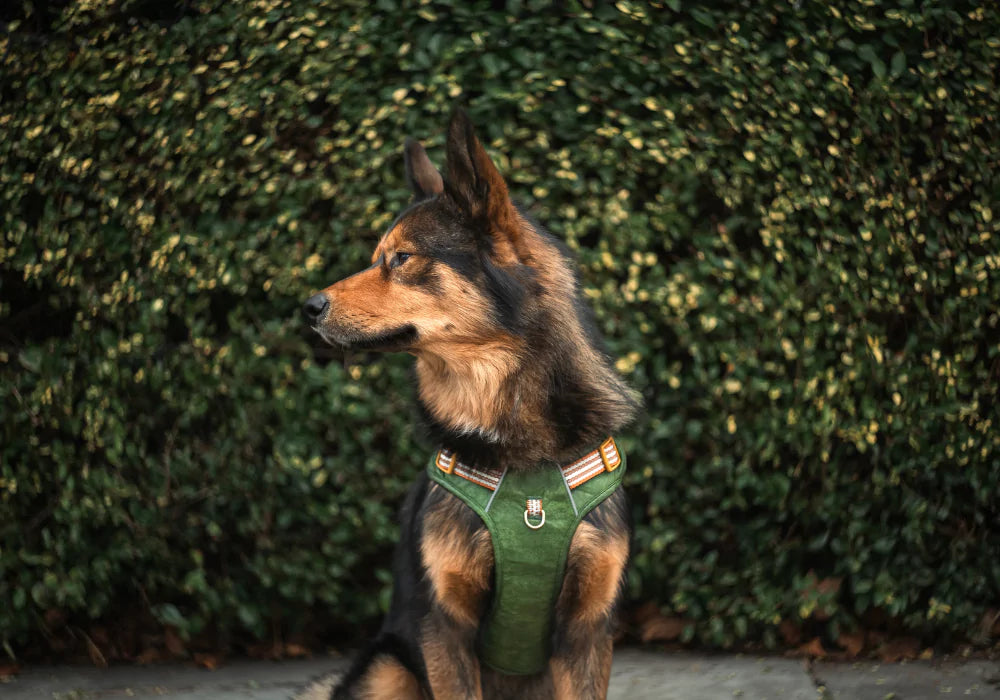
Harness vs Collar for Large Dogs
Whether you share your life with a Labrador Retriever, German Shepherd, Golden Retriever or another large breed, choosing between a dog harness and a collar can have a significant impact on your dog's comfort, safety and walking experience.
While collars remain useful for identification and everyday wear, many trainers, behaviourists and experienced owners now prefer harnesses for walking larger dogs. A well-designed harness distributes pressure across the chest rather than the neck, offers greater control, and can make walks more enjoyable for both dog and owner.
In this guide, we'll compare dog harnesses and collars for large breeds, explain the advantages and disadvantages of each, and help you decide which option best suits your dog's lifestyle.
Quick Answer
For most large dogs, a properly fitted Y-shaped harness is the better choice for walks. Harnesses provide greater control, reduce pressure on the neck, allow more natural movement, and are generally more comfortable for strong or enthusiastic dogs. A collar is still useful for carrying ID tags and can work well for calm dogs that walk politely on a loose lead.
If your large dog pulls, hikes regularly, enjoys long adventures or simply has plenty of strength, choose a well-fitted harness for walking and keep a collar for identification. For most owners, using both together offers the best combination of comfort, safety and practicality.
Verdict
| Category | Winner |
|---|---|
| Comfort | ✅ Harness |
| Control | ✅ Harness |
| Neck Safety | ✅ Harness |
| Natural Movement | ✅ Y-Shape Harness |
| ID Tags | ✅ Collar |
| Everyday Wear | ✅ Collar |
| Strong Pullers | ✅ Harness |
| Overall Walking Choice | 🏆 Harness |
At a Glance
| Best For | Harness | Collar |
|---|---|---|
| Dogs That Pull | ✅ Excellent | ❌ Not Ideal |
| Everyday Walks | ✅ Excellent | ✓ Suitable |
| Long Hikes | ✅ Excellent | ❌ Less Comfortable |
| Puppies | ✅ Recommended | ✓ For ID |
| Training | ✅ Excellent | ✓ Limited |
| ID Tags | ✓ Possible | ✅ Best |
| Senior Dogs | ✅ Excellent | ✓ Depends |
Jump to Section
- Harness vs collar: What's the difference?
- Side-by-side comparison
- Why trainers often recommend harnesses
- When a collar is still the better choice
- Large dogs that pull
- Can a harness reduce escape risk?
- Best option for popular large breeds
- Features to look for
- Choosing the right Canine Culture harness
- FAQs
Dog Harness vs Collar: What's the Difference?

Although both are designed to attach a lead, they work in very different ways.
A dog collar sits around the neck and provides a simple attachment point for a lead and identification tags.
A dog harness wraps around the chest and shoulders, spreading force across much stronger parts of the body. Rather than concentrating pressure on the neck, the harness supports the chest and ribcage, making it a more comfortable option for many large breeds.
For dogs that are powerful, energetic or still learning to walk nicely on lead, this difference can make a significant impact.
Harness vs Collar Comparison
| Feature | Harness | Collar |
|---|---|---|
| Pressure Distribution | Across chest | Across neck |
| Comfort for Pullers | Excellent | Poor |
| Control | Excellent | Moderate |
| Suitable for Hiking | Excellent | Fair |
| ID Tags | Possible | Excellent |
| Training | Excellent | Limited |
| Daily Wear | Usually for walks | Excellent |
| Comfort During Long Walks | Excellent | Moderate |
Why Trainers Often Recommend Harnesses

Many professional trainers recommend well-fitted Y-shaped harnesses because they allow dogs to move naturally while offering owners greater control during walks.
Unlike traditional collars, which concentrate force around the neck, a harness spreads pressure across the chest and shoulders where a dog's body is naturally stronger.
This is especially beneficial for:
- Labrador Retrievers
- Golden Retrievers
- German Shepherds
- Border Collies
- Dobermans
- Boxers
- Weimaraners
- Belgian Malinois
Large dogs generate considerably more force on the lead than smaller breeds. A properly fitted Y-shaped harness helps distribute that force across the chest instead of concentrating it around the neck, making walks more comfortable for both dog and owner.
If you'd like to learn more about harness design, read our guide on Why Y-Shape Dog Harnesses Are Better.
For dogs that pull strongly, pairing a two-clip harness with a double-ended dog lead can provide even greater control while encouraging loose-lead walking.
Why Shoulder Freedom Matters
A dog's front limbs generate most of its forward movement. Harnesses that sit directly across the shoulders may restrict stride length, particularly during longer walks.
That's why Y-shaped harnesses are increasingly recommended—they leave the shoulders free to move naturally while keeping the chest supported.
This becomes particularly important for active dogs that:
- Walk daily
- Run alongside owners
- Hike regularly
- Participate in training classes
- Enjoy outdoor adventures
If your dog measures between sizes, visit our Dog Harness Size Guide and Dog Chest Size Chart to find the best fit.
When Is a Collar Still the Better Choice?

Although harnesses are generally the preferred choice for walking large dogs, collars still play an important role in everyday life.
For many owners, the best solution isn't choosing one or the other—it's using both. A collar can hold your dog's identification tags while a harness is used for walks, training and outdoor adventures.
A collar may be the better option if your dog:
- Walks calmly without pulling
- Only needs identification around the house or garden
- Is making quick toilet trips close to home
- Needs to wear legally required ID tags
Many experienced owners leave a lightweight collar on throughout the day, then switch to a properly fitted harness whenever it's time to head outside.
Can Collars Cause Neck Strain?
Collars themselves are not harmful when fitted correctly and used appropriately. The issue usually arises when a large or powerful dog repeatedly pulls against the lead.
Unlike a harness, which distributes force across the chest, a collar concentrates that force around the neck.
Over time, repeated pulling may place unnecessary strain on sensitive structures including the:
- Neck muscles
- Trachea (windpipe)
- Throat
- Cervical spine
This doesn't mean collars should never be used—it simply highlights why many trainers recommend harnesses for walking larger, stronger dogs.
The stronger your dog is, the greater the force generated when they reach the end of the lead. For breeds capable of producing considerable pulling power, distributing that force across the chest is generally more comfortable than concentrating it around the neck.
What If My Large Dog Pulls?

If your dog pulls on walks, a harness is almost always the better option.
Large breeds can generate surprising amounts of force. Even friendly excitement can become difficult to manage when a 35kg Labrador or German Shepherd suddenly lunges towards another dog or interesting smell.
A quality Y-shaped harness provides:
- Better steering and control
- Reduced neck pressure
- More comfortable weight distribution
- Improved stability during walks
- Greater confidence for the handler
It's important to remember that no harness completely stops pulling on its own. Good loose-lead training remains essential, but a well-designed harness makes that training safer and more comfortable.
For dogs that pull consistently, pairing a two-point harness with a double-ended dog lead gives many owners noticeably more control while allowing gentle redirection during training.
You may also find our guide Can Pulling Damage a Dog's Shoulders? helpful if your dog frequently pulls on walks.
Can a Harness Reduce Escape Risk?
Yes—provided it fits correctly.
Some dogs can back out of loose collars surprisingly easily, particularly if they become frightened or suddenly reverse while on the lead.
A properly adjusted harness wraps around the chest rather than relying solely on the neck, making accidental escapes less likely for many dogs.
For particularly nervous or reactive dogs, ensuring the harness fits snugly (while still allowing two fingers beneath each strap) can provide valuable additional security.
As always, fit matters just as much as design. A poorly adjusted harness can still allow escape.
Harness or Collar? Recommendations by Breed
| Breed | Recommended | Why? |
|---|---|---|
| Labrador Retriever | ⭐ Harness | Strong, energetic and prone to enthusiastic pulling. |
| Golden Retriever | ⭐ Harness | Excellent for active walks and longer adventures. |
| German Shepherd | ⭐ Harness | Provides greater control during training and exercise. |
| Border Collie | ⭐ Harness | Ideal for highly active breeds needing freedom of movement. |
| Doberman | ⭐ Harness | Comfortable and secure for athletic dogs. |
| Boxer | ⭐ Harness | Reduces neck pressure during energetic walks. |
| Rottweiler | ⭐ Harness | Offers improved handling for powerful breeds. |
| Weimaraner | ⭐ Harness | Excellent for running and outdoor adventures. |
What About Giant Breeds?
For giant breeds such as Great Danes, Newfoundlands, Saint Bernards and Mastiffs, harness choice becomes even more important.
These dogs can generate enormous force simply through their size, making wide, padded straps particularly beneficial for distributing pressure comfortably across the chest.
If you own a giant breed, look for a harness that offers:
- Wide padded chest panels
- Heavy-duty stitching
- Strong metal hardware where possible
- Multiple adjustment points
- A Y-shaped front design
What Features Should You Look For?
| Feature | Importance | Why It Matters |
|---|---|---|
| Y-Shaped Front | ⭐⭐⭐⭐⭐ | Allows natural shoulder movement. |
| Adjustable Straps | ⭐⭐⭐⭐⭐ | Creates a safer, more secure fit. |
| Padded Chest | ⭐⭐⭐⭐⭐ | Improves comfort on longer walks. |
| Reflective Trim | ⭐⭐⭐⭐ | Improves visibility after dark. |
| Front & Back Lead Clips | ⭐⭐⭐⭐⭐ | Offers greater walking versatility. |
| Durable Materials | ⭐⭐⭐⭐⭐ | Important for strong breeds. |
Which Canine Culture Harness Is Right for Your Dog?

Different dogs have different needs, which is why choosing the right style of harness matters.
Custom Canine Y-Harness

Perfect for everyday walks, training and all-round comfort. Its Y-shaped design encourages natural movement while providing excellent control.
Shop the Custom Canine Harness →
Cordura Active Harness

Designed for active dogs that enjoy daily adventures, longer walks and outdoor exercise. Lightweight, durable and comfortable for regular use.
Cordura Exploration Harness

Ideal for hiking, camping and longer expeditions thanks to its rugged construction and integrated storage pockets.
View the Exploration Harness →
Buying Checklist
Before choosing a harness for your large dog, check that it offers:
- ☑ Y-shaped front design
- ☑ Adjustable neck and chest straps
- ☑ Comfortable padding
- ☑ Reflective detailing
- ☑ Front and rear lead attachment points
- ☑ Strong buckles
- ☑ Durable stitching
- ☑ Enough room for the two-finger fit test
Common Buying Mistakes
| Mistake | Why It's a Problem | Better Choice |
|---|---|---|
| Choosing by weight alone | Dogs of the same weight vary greatly in shape. | Measure chest size first. |
| Buying too small | Can restrict movement. | Choose the correct adjustable size. |
| Ignoring shoulder movement | May reduce walking comfort. | Select a Y-shaped harness. |
| Using only a collar for strong pullers | Can increase neck pressure. | Use a harness for walks. |
Related Guides
- Why Y-Shape Dog Harnesses Are Better
- Can Pulling Damage a Dog's Shoulders?
- Dog Harness Size Guide
- Dog Chest Size Chart
- Dog Breed Guides
Conclusion
For most large dogs, a well-fitted harness offers the best balance of comfort, control and safety during walks. By distributing pressure across the chest instead of the neck, harnesses are particularly well suited to strong breeds, energetic puppies and dogs that pull on the lead.
That doesn't mean collars have no place—they remain essential for carrying identification and are perfectly suitable for many calm dogs. In reality, most experienced owners choose to use both: a lightweight collar for everyday wear and a supportive harness whenever it's time to head out.
If you're investing in a harness, focus on fit, adjustability and a Y-shaped design that allows natural movement. Choosing the right equipment can make every walk safer, more comfortable and more enjoyable for both you and your dog.
Browse Canine Culture Dog Harnesses →
Frequently Asked Questions
Is a harness better than a collar for a large dog?
For most large dogs, yes. Harnesses provide greater control, distribute pressure more evenly across the chest and are generally more comfortable during walks.
Should large dogs wear a harness every day?
Harnesses are ideal for walks and adventures, while many owners prefer a lightweight collar with ID tags for everyday wear around the home.
Can a collar damage a large dog's neck?
A properly fitted collar is safe, but repeated pulling can place unnecessary strain on the neck. A harness helps reduce this pressure during walks.
What type of harness is best?
Most trainers recommend a well-fitted Y-shaped harness because it supports natural movement while providing excellent comfort and control.
Do harnesses stop pulling?
No harness completely stops pulling, but a quality harness combined with positive training can make walks safer and easier to manage.
Can my dog wear both a collar and a harness?
Absolutely. Many owners use a collar for identification and a harness whenever they're walking their dog.

Share:
Why Do Dogs Tilt Their Heads? (8 Reasons Explained)
Dog Harness vs Collar for Small Dogs: Which Is Better?