


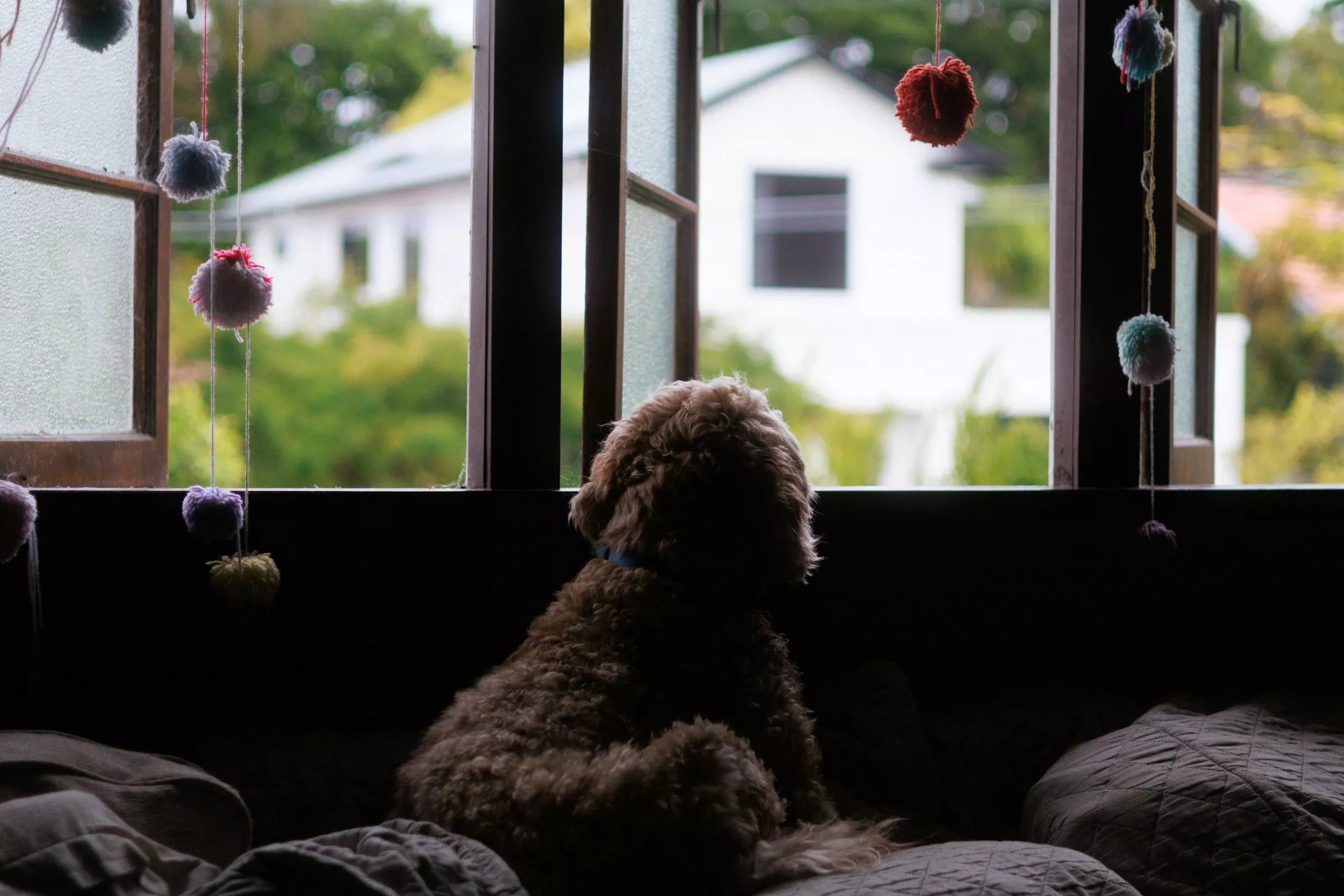
It’s a familiar scene: you pull into your driveway, open the door — and your dog is already there waiting, tail wagging and eyes bright. Some owners even report their dog heading to the door minutes before they arrive. Coincidence? Routine? Or something deeper?
Research suggests that dogs have remarkable ways of predicting when their humans are coming home — not through magic, but through powerful senses, pattern recognition, and a bond shaped over thousands of years.
Jump to:
- 1. Your Scent Fades Throughout the Day
- 2. Dogs Understand Your Routine Better Than You Think
- 3. They Recognise the Sounds Associated With Your Arrival
- 4. Emotional Attachment Plays a Huge Role
- 5. Some Dogs Can Read Environmental Cues Too
- FAQs
1. Your Scent Fades Throughout the Day
 A dog’s sense of smell is extraordinary — up to 100,000 times stronger than ours. One theory suggests dogs can estimate time by how much your scent has faded in the home.
As your scent naturally dissipates from furniture, bedding, and clothing, dogs may learn that a certain “level” of scent fading means you're due to return soon. It’s not conscious prediction — it’s biological pattern recognition.
2. Dogs Understand Your Routine Better Than You Think
Dogs are creatures of habit. They watch everything: when you wake, leave, eat, walk, and return. Even if your schedule feels random to you, dogs notice micro-patterns we overlook.
Over weeks and months, they map your routine until your arrival becomes predictable. It’s not about clocks — it’s about consistency.
If your dog heads to the door around the same time every day, it’s likely because they've internalised the rhythm of your household.
3. They Recognise the Sounds Associated With Your Arrival
 Dogs can hear frequencies far beyond human range — and recognise subtle acoustic cues long before you do. This includes:
- Your footsteps or walking cadence
- The hum of your car engine
- Your keys jingling
- Your voice outside
- Neighbourhood sounds that reliably precede your return
Some dogs can distinguish the sound of their owner's individual car from others on the street. They start waiting at the door because they know what’s coming next.
4. Emotional Attachment Plays a Huge Role
Dogs form deep attachment bonds with their humans — bonds that resemble parent-child relationships. They prefer proximity, feel safer when you’re near, and experience genuine happiness when you return.
Waiting at the door may simply be their favourite ritual of the day. Your return provides comfort, predictability, and emotional reassurance.
To learn more about attachment signals, see our blog: 6 Signs Your Dog Loves You.
5. Some Dogs Can Read Environmental Cues Too
Dogs might also use subtle environmental signals to anticipate your return:
- Changes in daylight
- The timing of daily neighbourhood events
- Sounds of buses or traffic patterns
- Shifts in household activity
They pick up on cues we barely notice — which, combined with scent and routine, creates an impressive ability to predict your arrival with surprising accuracy.
FAQs
Does my dog know the exact time I come home?
Not in a clock sense — but dogs track patterns through scent fading, routine, and environmental cues, which can make it seem like perfect timing.
Why does my dog act excited even if I was gone for five minutes?
Dogs don’t measure time like humans. Whether five minutes or five hours, your return is the highlight of their day.
My dog doesn’t greet me at the door — is that normal?
Completely. Some dogs show affection by staying relaxed on their bed or greeting you calmly later. It’s personality, not lack of love.
Can dogs sense when something delays me?
They may notice changes in routine or environmental cues, but they don’t understand delays in a human sense.
Why does my dog wait at the window instead of the door?
They’re simply using the best vantage point to detect your scent, your car, or familiar sounds.

Share:
What Christmas Foods Can Dogs Eat?
Top 7 Foods Every Dog Should Eat