


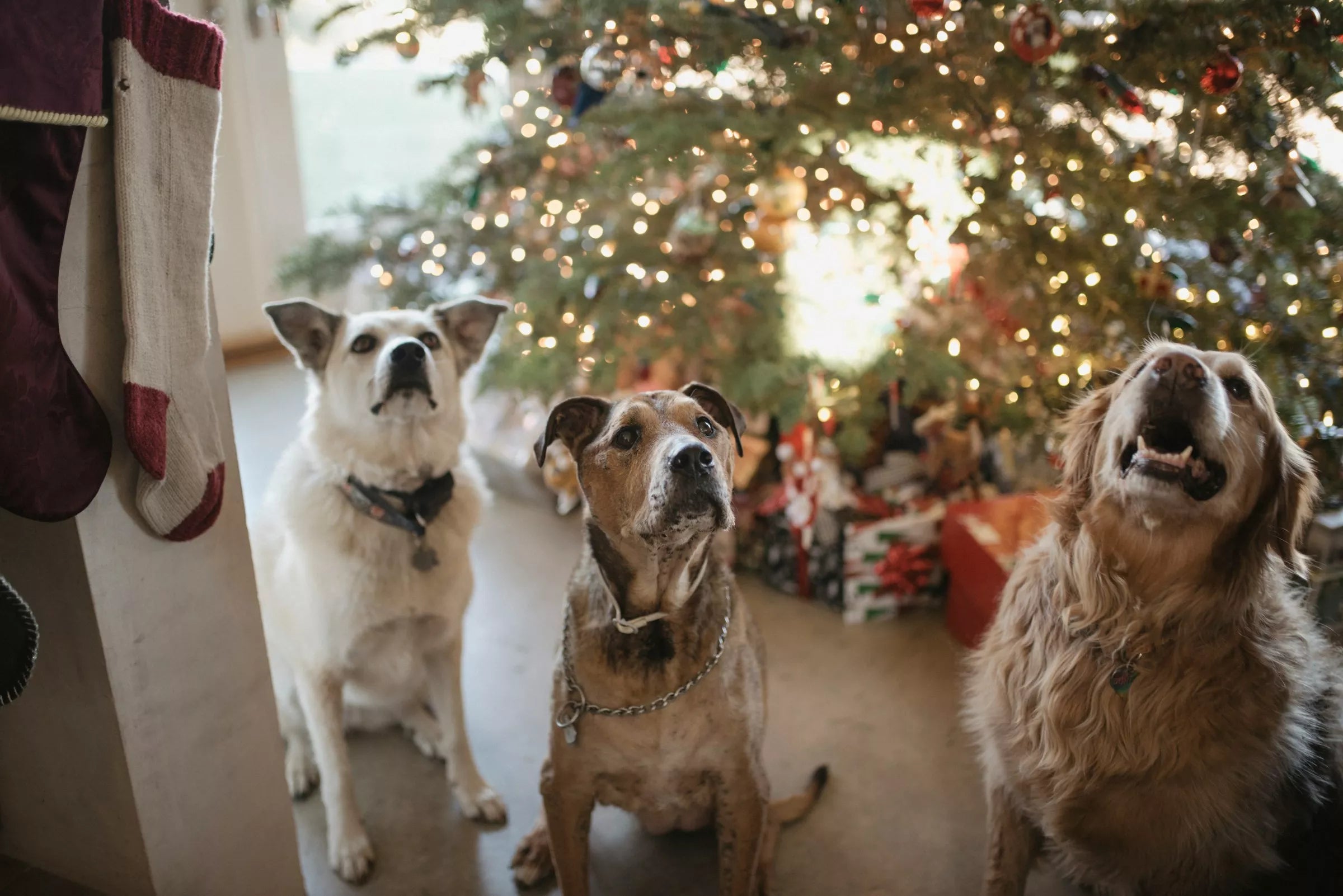
Christmas meals bring warmth, tradition, and indulgence — and your dog will certainly notice the smells. But while some festive foods are perfectly safe to share in moderation, others can be harmful or even toxic. This guide breaks down exactly what your dog can eat at Christmas so you can enjoy the season without worry.
Jump to:
- Safe Christmas Foods for Dogs
- Christmas Foods to Avoid
- How Much Is Safe to Share?
- Healthy Festive Alternatives
- FAQs
Safe Christmas Foods for Dogs
 These foods are generally safe in small amounts, as long as they’re plain and unseasoned.
Plain Turkey Meat
Boneless, skinless, fully cooked turkey breast is a great lean protein. Avoid skin, gravy, butter, or seasoning.
Carrots
Raw or cooked carrots are a crunchy, festive snack that’s gentle on tummies.
Green Beans
Steamed, plain green beans are a healthy fibre source and great low-cal treat.
Brussels Sprouts (Small Amounts)
They’re safe cooked and plain — but too many may cause gas.
Mashed Potato (No Butter or Milk)
If served plain, mashed potato can be fine — but avoid dairy-heavy versions.
Apple Slices
Fresh apple without seeds makes a refreshing snack.
Plain Salmon
Cooked salmon (no oil, seasoning, or bones) is a great source of omega-3s.
Sweet Potato
Boiled or baked plain sweet potato is rich in fibre and vitamins.
Cranberries
Fresh or cooked cranberries are okay — but avoid cranberry sauce due to sugar levels.
Christmas Foods to Avoid
 These items can cause illness or pose serious risks — keep them well out of reach.
Stuffing
Often contains onions, garlic, and herbs that are toxic to dogs.
Onions, Garlic, Leeks, Chives
Even small amounts can damage red blood cells and cause anaemia.
Chocolate
Extremely dangerous due to theobromine. Dark chocolate is the most toxic.
Mince Pies & Christmas Pudding
Contain raisins, currants, sultanas, and alcohol — all very toxic to dogs.
Alcohol
Even small amounts can be fatal for dogs.
Turkey Bones
Cooked bones splinter easily and can cause choking or internal injury.
Gravy
Often high in salt, fat, and onion powder. Avoid entirely.
Pigs in Blankets
High in fat and salt — can trigger pancreatitis, especially in small dogs.
Xylitol-Sweetened Foods
Sugar-free products may contain xylitol, which is deadly to dogs even in tiny amounts.
How Much Is Safe to Share?
 Even safe Christmas foods should only make up a tiny portion of your dog’s diet. Overindulgence can lead to pancreatitis, stomach upset, or weight gain.
Follow the 10% rule: treats (including Christmas foods) should be no more than 10% of daily calories.
For dogs with sensitive stomachs, stick to familiar foods and avoid sharing too much at once.
Healthy Festive Alternatives
If you’d like your dog to feel included without risking their health, try offering:
- Small amounts of plain turkey in their bowl
- Frozen carrot sticks as a festive chew
- A Christmas-themed sniffari walk for enrichment
- A cosy nap spot — like a deep-sleep or orthopaedic dog bed
- A new harness or enrichment toy as a Christmas gift
Idea: create a “dog-safe Christmas plate” using plain turkey, sweet potato, and steamed vegetables.
FAQs
Can my dog eat Yorkshire pudding?
It’s not toxic, but it’s fatty and salty. Best avoided.
What should I do if my dog eats raisins or chocolate?
Contact a vet immediately — these are medical emergencies.
Is it safe for dogs to have gravy?
No. Most gravy contains onion, salt, and fat — all unsafe for dogs.
Can dogs eat cheese at Christmas?
Small amounts are usually fine, but avoid if your dog is lactose intolerant.
How can I include my dog in Christmas dinner safely?
Offer small portions of plain, dog-safe foods and avoid table scraps. Preparing a dog-friendly plate is safest.

Share:
Why Your Dog Waits at the Door (Explained)
Does Your Dog Know You’re Coming Home? (Explained)