


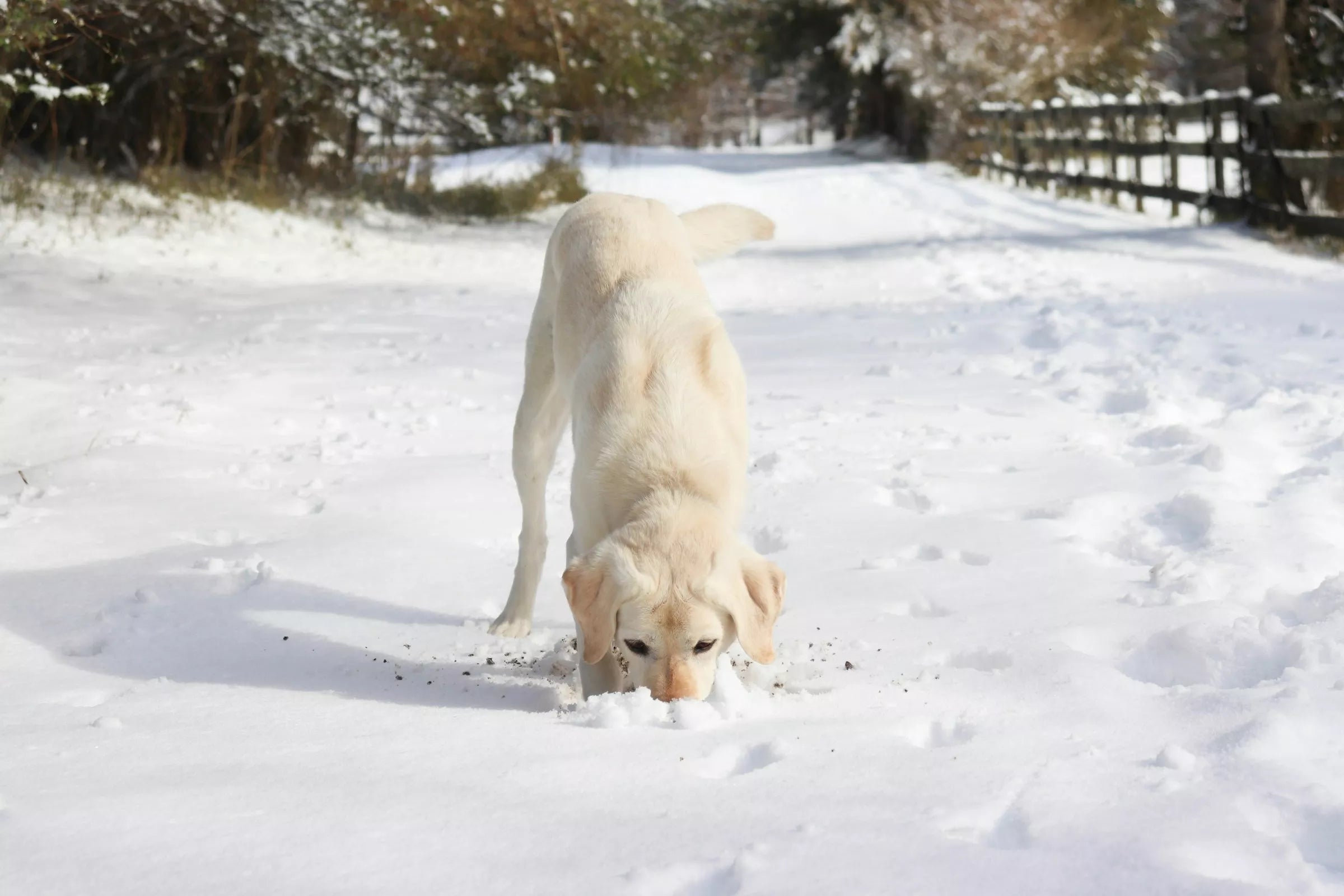
To us, smell is a background sense. To dogs, it’s the foundation of reality.
Long before humans relied on vision, speech, and written language, dogs’ ancestors were navigating the world almost entirely through scent. That evolutionary head start is why your dog’s nose doesn’t just smell things — it interprets time, emotion, health, and history.
Understanding this changes how we see everyday dog behaviour, from sniffing on walks to how dogs read us so accurately.
The Evolution of the Canine Nose
 Dogs descended from early carnivorous mammals that relied on scent to survive. Long before early humans developed advanced tools or language, these animals were already using smell to track prey, identify danger, and communicate with one another.
Modern dogs inherited this system almost intact. While humans evolved to prioritise vision and cognition, dogs remained scent-first thinkers.
This means that when dogs and humans evolved together, dogs adapted not to speak our language — but to read our chemistry.
How Powerful Is a Dog’s Sense of Smell?
The numbers are striking:
- Dogs have up to 300 million olfactory receptors (humans have around 6 million)
- The part of a dog’s brain devoted to analysing smell is proportionally 40 times larger than in humans
- Dogs have a specialised organ (the vomeronasal organ) that detects pheromones and chemical signals
Dogs don’t just smell objects — they smell layers. Who’s been there, how long ago, emotional states, hormonal changes, even illness.
How Dogs Process Smell in the Brain
 When a dog smells something, the information goes straight to brain regions involved in memory, emotion, and decision-making.
This is why scent is so emotionally powerful for dogs. A familiar smell can trigger calm. A strange one can cause alertness. A stress-related scent can change behaviour instantly.
It’s also why dogs can detect human emotions through smell — something we explored in how dogs smell human stress.
What This Means in Everyday Life
Once you understand how dominant scent is for dogs, a lot of behaviours suddenly make sense.
- Why dogs stop constantly to sniff on walks
- Why they recognise people they haven’t seen for years
- Why they know when you’re unwell or upset
- Why they seem to “know” when you’re coming home
From a dog’s perspective, the world is a living map of information — and their nose is how they read it.
Why Sniffing Is Essential (Not Optional)
Many owners see sniffing as a distraction. In reality, sniffing is mental enrichment.
Allowing dogs to sniff:
- Reduces stress and anxiety
- Improves focus later in training
- Provides cognitive stimulation
- Fulfils instinctive needs
Sniff-heavy walks can be more tiring — and more satisfying — than long, fast-paced ones.
This is why structured freedom, using a comfortable, secure harness, often leads to calmer dogs overall.
FAQs
Is a dog’s nose really older than humans?
Yes. Scent-first navigation evolved millions of years before humans relied heavily on sight and language.
Can dogs smell time?
Dogs can detect scent decay, which helps them estimate how long ago something happened.
Why does my dog sniff the same spot every walk?
Because the scent changes daily. To your dog, it’s new information every time.
Can dogs smell illness?
Yes. Dogs can detect chemical changes associated with certain diseases and health conditions.
Should I let my dog sniff more on walks?
Yes, absolutely! Sniffing supports mental health and emotional regulation.


Share:
Dogs Have a Built-In Lie Detector
How Dogs Decide Who Their “Person” Is