


How Long Can a Dog Travel in a Car?
There's no single maximum number of hours a dog can travel in a car—healthy adult dogs can comfortably manage full travel days when breaks are handled correctly. What actually matters is how often you stop, how your dog is restrained, and whether you're reading their signals along the way.
This guide covers exactly how often to stop by age and dog type, what UK law actually requires, and how to keep car journeys safe from the school run to a cross-country trip.
Quick Answer
Most healthy adult dogs should have a break every 2–3 hours, for at least 15–20 minutes, with total travel limited to around 7–8 hours per day. Puppies need a break every 30–60 minutes, while senior dogs and those with joint stiffness do best with a stop roughly every 90 minutes. Always restrain your dog securely in the back seat—UK law (Highway Code Rule 57) requires animals to be suitably restrained so they can't distract the driver or injure themselves if you brake suddenly.
Jump to Section
- Break guidelines by dog type
- What UK law actually requires
- Signs your dog needs a break sooner
- How to restrain your dog safely
- Heat is the real danger, not duration
- Common mistakes to avoid
- Recommended car safety products
- FAQs
Break Guidelines by Dog Type
| Dog Type | Break Every | Break Length |
|---|---|---|
| Puppies (under 6 months) | 30–60 minutes | 10–15 minutes |
| Healthy adult dogs | 2–3 hours | 15–20 minutes |
| Senior dogs / joint stiffness | ~90 minutes | 15–20 minutes |
| Dogs prone to travel sickness or anxiety | As needed—often sooner than 2 hours | Until settled |
A dog sleeping soundly through a long overnight journey in a secured crate can often go longer between stops than these guidelines suggest—it's restlessness and need, not the clock, that should ultimately guide your stops.
What UK Law Actually Requires

The Highway Code (Rule 57) states that animals must be suitably restrained in a vehicle so they cannot distract the driver or injure themselves or others if you stop suddenly. This applies whether you're on a five-minute school run or a five-hour motorway trip—there's no minimum journey length before the rule applies.
The Highway Code also recommends drivers take a break of at least 15 minutes after every two hours of driving—useful to know, since this lines up naturally with your dog's own break needs on most journeys.
Suitable restraint options include:
- A harness that clips into the car's seatbelt system
- A secured crate or carrier, anchored so it can't slide
- A dog guard combined with a boot-mounted harness
Unrestrained dogs aren't just a legal risk—in a collision, an unrestrained dog can become a serious projectile hazard to everyone in the car.
Signs Your Dog Needs a Break Sooner
Schedules are a helpful starting point, but your dog's behaviour should always override the clock.
| Sign | What It Usually Means |
|---|---|
| Whining or pacing in the crate/seat | Needs to toilet or stretch |
| Excessive drooling or lip licking | Possible motion sickness building |
| Panting heavily despite a cool car | Stress or early travel anxiety |
| Sudden stillness after being restless | Can indicate nausea—worth checking directly |
| Shifting weight, stiffness when finally out | Sign breaks should come more frequently, especially for seniors |
If your dog isn't used to long journeys, build up gradually with short practice trips before a big one—the same desensitisation principle used for harness training works here too. A dog that's relaxed on 30-minute drives will cope far better with a 3-hour one than a dog experiencing it for the first time.
How to Restrain Your Dog Safely
The safest place for a dog in a car is the back seat—never the front, where an airbag deploying in a crash can cause serious injury to a restrained pet.
| Method | Best For |
|---|---|
| Car seatbelt harness | Most dogs; allows sitting or lying down while secured |
| Secured crate/carrier | Puppies, anxious dogs, or dogs prone to chewing at restraints |
| Boot-mounted harness + dog guard | Larger breeds travelling in the boot area |
Many of our everyday walking harnesses can be paired with a car seatbelt attachment, so your dog doesn't need a separate harness just for travel. If you're prepping for a longer trip, our Ultimate Summer Dog Travel Checklist covers everything else worth packing.
Heat Is the Real Danger, Not Duration
Never leave a dog alone in a parked car, even briefly, even with windows cracked. On a mild 20°C day, a car's interior can reach 30°C within just 10 minutes—and keep climbing. This applies regardless of how long the dog has already been travelling.
If you're travelling in warmer weather, our guide on keeping your dog cool covers the same overheating warning signs to watch for during car breaks, not just walks.
Common Mistakes to Avoid
| Mistake | Better Approach |
|---|---|
| Letting a dog ride loose in the car | Use a proper seatbelt harness or secured crate—every journey, not just long ones |
| Feeding right before departure | Feed a light meal 3–4 hours before travel to reduce car sickness risk |
| Waiting for obvious distress before stopping | Build in scheduled breaks proactively, especially for puppies and seniors |
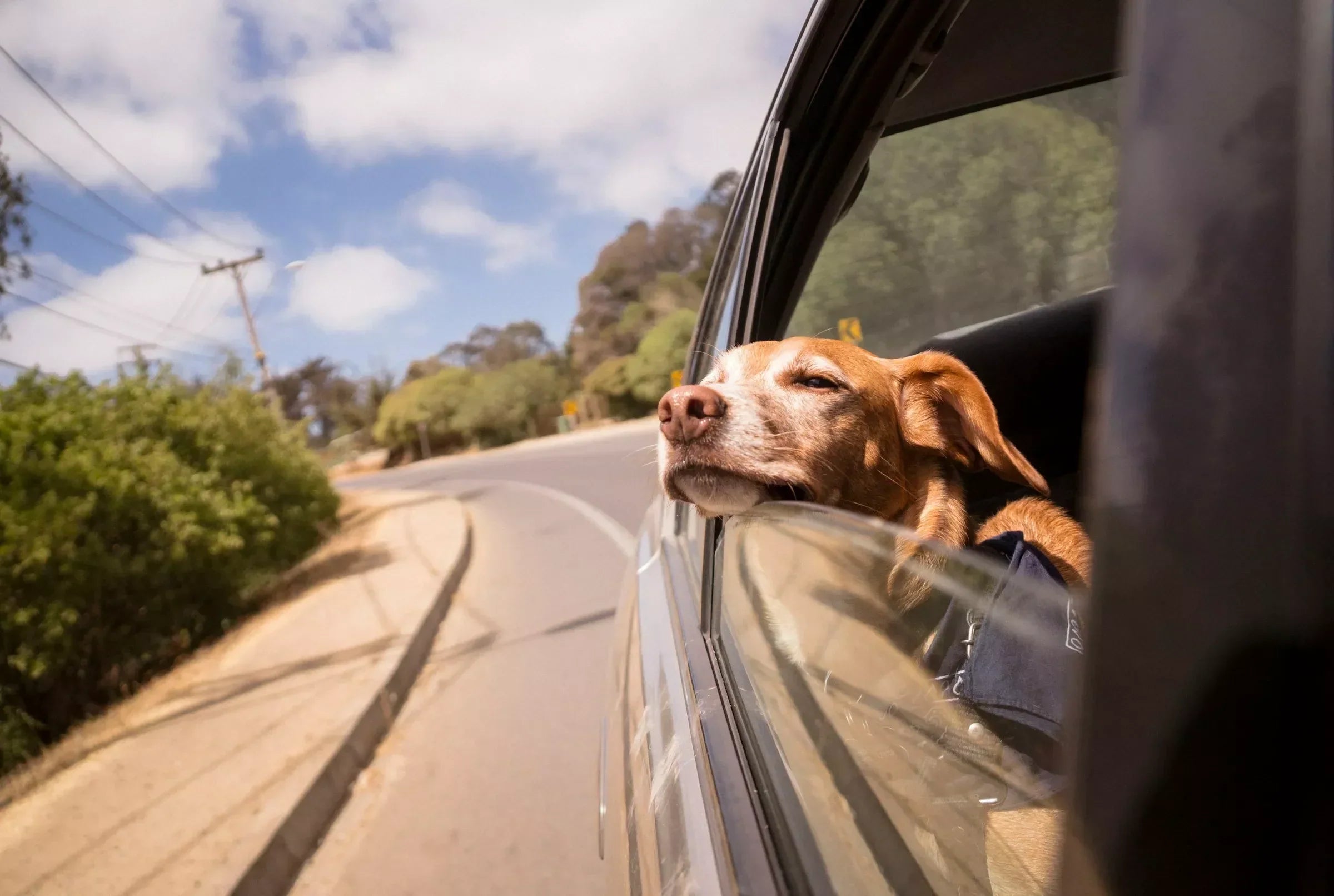
| Letting a dog ride with its head out the window | Keep windows only slightly open—debris can injure eyes and ears |
| Assuming a short trip doesn't need restraint | Highway Code restraint rules apply to every journey length |
Recommended Car Products

Car Seatbelt for Dogs
A universal-fit safety belt that clips into your existing seatbelt system, allowing your dog to sit, lie down, or gaze out the window while staying securely restrained.
Full Car Seat Cover
Padded, waterproof protection for your seats with a built-in seatbelt opening, so your dog's harness or seatbelt attachment works exactly as it should.
Continue Learning
- The Ultimate Summer Dog Travel Checklist
- How to Keep Your Dog Cool on a Walk
- Are Rear Car Seat Covers Worth It?
- Shop Harnesses
Frequently Asked Questions
How long can a dog safely stay in a car?
There's no fixed maximum for healthy adult dogs as long as breaks are taken every 2–3 hours and total daily travel stays around 7–8 hours. Puppies and seniors need more frequent stops.
Is it a legal requirement to restrain a dog in the car in the UK?
Yes. Highway Code Rule 57 requires animals to be suitably restrained so they cannot distract the driver or be injured if you stop suddenly, regardless of journey length.
How often should puppies take breaks in the car?
Every 30–60 minutes, with gradual increases as they build bladder control and get more comfortable with travel.
Can a dog travel overnight in the car without stopping?
A calm adult dog asleep in a secured crate can often manage longer overnight stretches, but this depends on the individual dog—always plan for a break opportunity every few hours regardless.
Is it safe to leave a dog in the car during a break?
No. Never leave a dog unattended in a parked car, even briefly or with windows cracked—internal temperatures can become dangerous within minutes, even on mild days.
What's the safest way to restrain a dog in the car?
A seatbelt-clipped harness or a securely anchored crate, positioned in the back seat rather than the front, away from airbags.

Share:
How to Keep Your Dog Cool on a Walk (Full Guide)
Types of Dog Leads: Which One Is Right for Your Dog?