


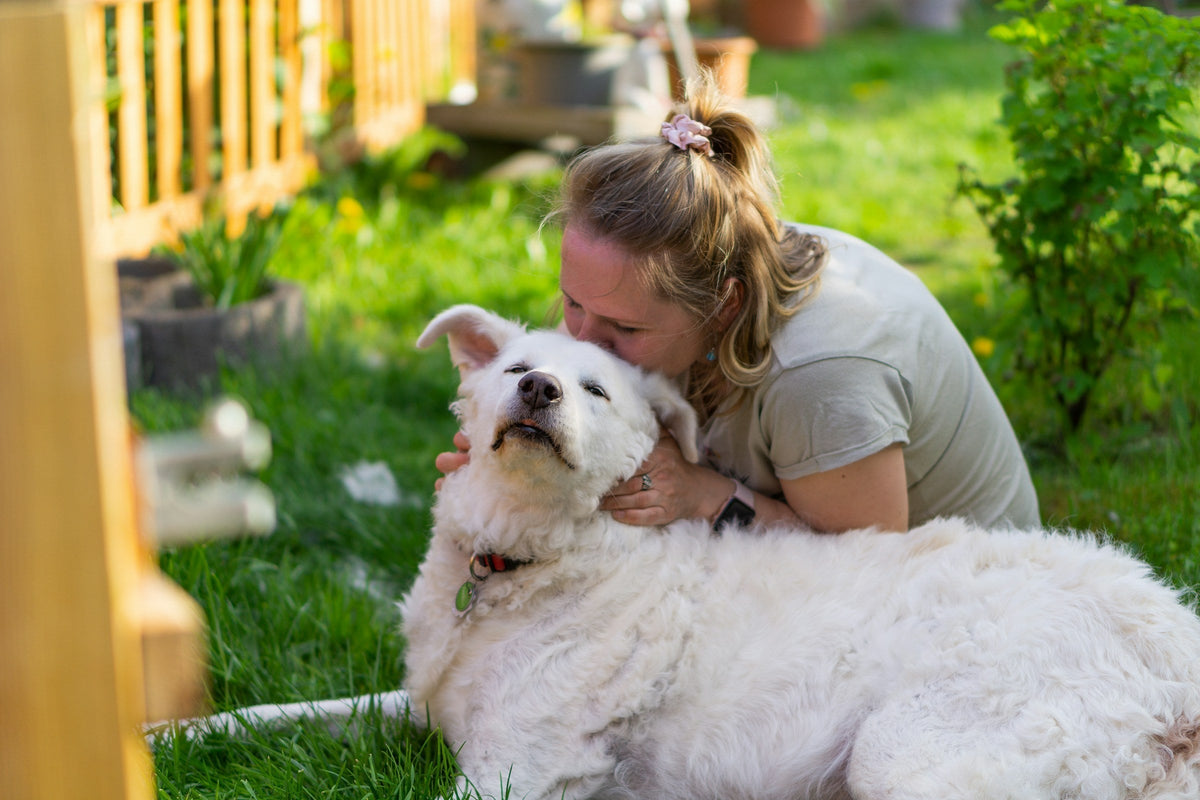
Where Is a Dog's Heart? Location, Function and Warning Signs
A dog's heart sits in roughly the same general area as ours—but not in exactly the same spot. Knowing precisely where it is, what a normal heartbeat feels like, and which signs mean it's time to call the vet is genuinely useful knowledge for any dog owner, not just trivia.
Quick Answer
A dog's heart sits in the lower chest, tilted slightly to the left, positioned between roughly the 3rd and 6th ribs—level with the point of the elbow when the front leg is in a natural standing position. You can feel it most easily by placing a flat hand against the lower-left side of the chest, just behind the front leg. It has four chambers, just like a human heart, and beats faster than ours—typically 60–140 beats per minute depending on the dog's size.
Jump to Section
- Where the heart sits (diagram)
- How a dog's heart works
- Normal heart rate by size
- How to check your dog's pulse at home
- Warning signs of heart problems
- Breeds more prone to heart conditions
- Supporting your dog's heart health
- FAQs
Where the Heart Sits
Simplified diagram — exact position varies slightly by breed and chest shape.
How a Dog's Heart Works
A dog's heart has four chambers—two atria and two ventricles—working the same way a human heart does: the right side pumps blood to the lungs to collect oxygen, and the left side pumps that oxygen-rich blood around the body. It's protected by the ribcage, positioned closer to the sternum than the spine, tilted slightly left of centre.
Heart size scales with body size, but not perfectly—proportionally, small dogs tend to have a slightly larger heart relative to their body weight than large breeds do.
Normal Heart Rate by Size
| Dog Size | Typical Resting Heart Rate |
|---|---|
| Puppies (all sizes) | 160–220 bpm |
| Small breeds (adult) | 100–140 bpm |
| Medium breeds (adult) | 80–120 bpm |
| Large/giant breeds (adult) | 60–100 bpm |
Very fit, athletic dogs—much like conditioned human athletes—can sometimes have a resting heart rate below these ranges. A lower rate isn't automatically a problem; it's the context and any accompanying symptoms that matter.
How to Check Your Dog's Pulse at Home
You don't need special equipment to get a rough reading of your dog's heart rate:
- Find the femoral artery. With your dog lying on their side, place two fingers on the inner thigh of a back leg, close to where it meets the body.
- Feel for the pulse. You should feel a gentle, rhythmic beat.
- Count for 15 seconds. Multiply by 4 to get beats per minute.
- Repeat when calm. Take the reading when your dog is relaxed, not right after exercise or excitement, for an accurate baseline.
Alternatively, you can place a flat hand directly on the lower-left chest, just behind the front leg, where the heartbeat is often felt most strongly.
Warning Signs of Heart Problems
| Early/Ongoing Signs (Book a Vet Visit) | Emergency Signs (Seek Immediate Care) |
|---|---|
| Persistent coughing, especially at night or after lying down | Collapse or fainting |
| Reduced stamina or tiring more easily on walks | Pale or bluish gums |
| Restlessness at night | Extreme difficulty breathing |
| Mild, occasional lethargy | Distended, swollen abdomen |
If your dog collapses, has pale or blue-tinged gums, or is struggling severely to breathe, this is an emergency—contact an emergency vet immediately rather than waiting for a routine appointment.
Breeds More Prone to Heart Conditions
| Breed | Commonly Associated Condition |
|---|---|
| Cavalier King Charles Spaniel | Mitral valve disease—one of the most extensively documented breed-linked heart conditions in dogs |
| Boxer | Boxer cardiomyopathy (arrhythmogenic right ventricular cardiomyopathy) |
| Doberman | Dilated cardiomyopathy (DCM)—one of the most researched breed predispositions in veterinary cardiology |
| Any breed | Heart disease can still occur outside these predispositions, particularly with age |
A breed predisposition isn't a diagnosis—it's a reason for extra awareness, not alarm. Regular vet check-ups matter for every dog regardless of breed.
Supporting Your Dog's Heart Health
- Regular vet check-ups. Vets listen for heart murmurs and irregular rhythms during routine visits, often catching issues before symptoms appear.
- Maintain a healthy weight. Excess weight puts additional strain on the heart over time.
- Consistent exercise. Regular, moderate activity supports cardiovascular health—avoid sudden intense exertion in unconditioned dogs.
- Watch for heat strain. Overheating puts extra demand on the heart; our guide on keeping your dog cool on a walk covers how to manage this on hot days.
Frequently Asked Questions
Can I feel my dog's heartbeat?
Yes. Place a flat hand on the lower-left side of the chest, just behind the front leg, or check the femoral pulse on the inner thigh.
What is a normal heart rate for a dog?
It varies by size: roughly 60–100 bpm for large breeds, 80–120 bpm for medium breeds, and 100–140 bpm for small breeds. Puppies run faster, typically 160–220 bpm.
Are certain breeds more prone to heart problems?
Yes. Cavalier King Charles Spaniels, Boxers, and Dobermans are among the breeds most commonly associated with specific heart conditions, though any dog can develop heart disease.
What are the first signs of heart disease in dogs?
Persistent coughing (especially at night), reduced stamina, and mild lethargy are common early signs. These warrant a vet visit rather than emergency care.
What should I do if I think my dog is having a heart emergency?
Collapse, pale or blue gums, or severe breathing difficulty need immediate emergency veterinary attention—don't wait for a routine appointment.
Does exercise affect heart health in dogs?
Yes, positively. Regular, moderate exercise supports cardiovascular health and helps maintain a healthy weight, which reduces strain on the heart.


Share:
Which Dog Has the Strongest Bite?
Will Dog Pee Kill Grass?