


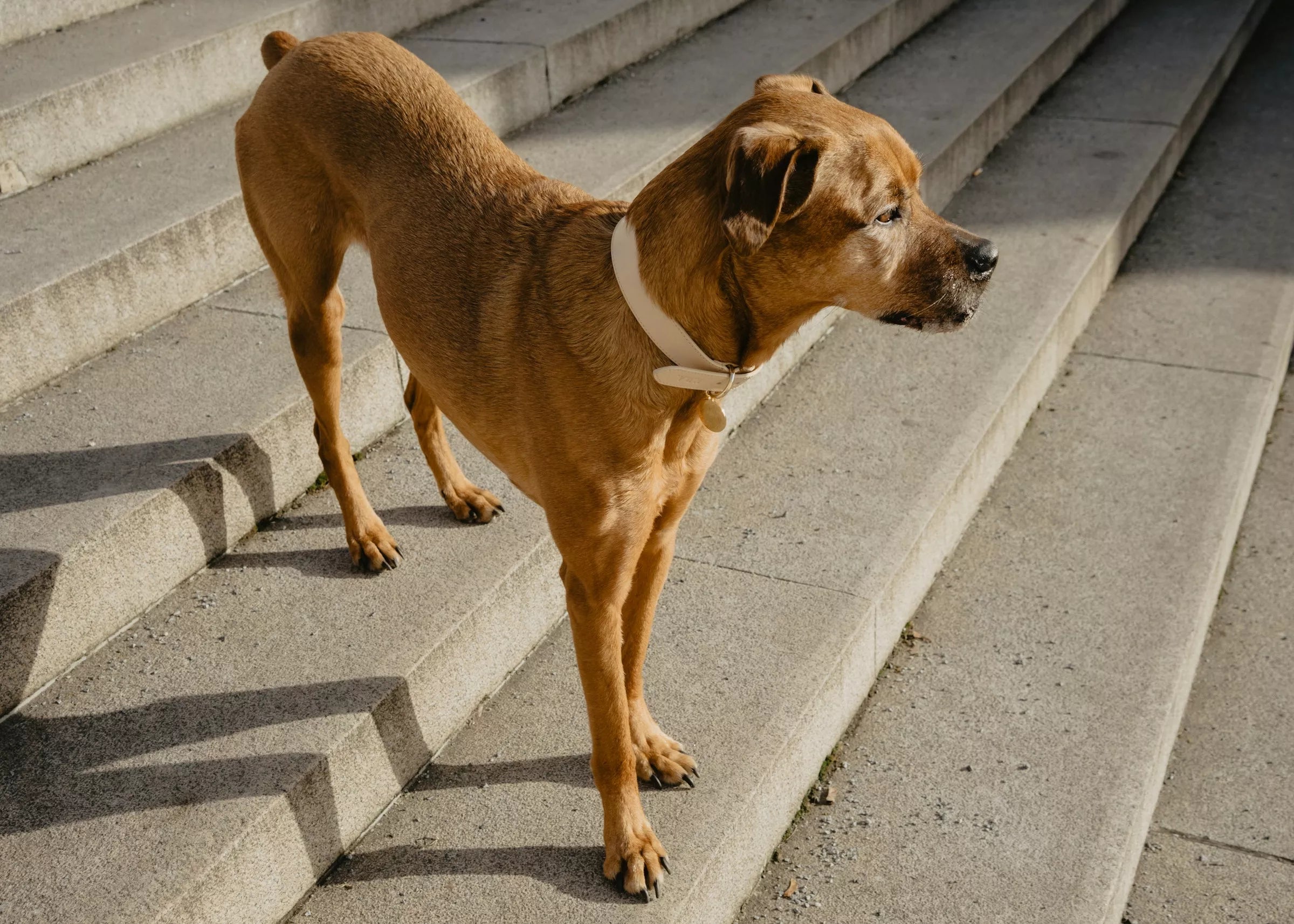
Should Older Dogs Use Stairs?
As dogs age, everyday activities that once seemed effortless can become more challenging.
One of the most common questions owners ask is:
"Should my older dog still use stairs?"
The answer isn't always straightforward.
For some senior dogs, stairs remain perfectly safe and can even help maintain strength and mobility. For others, stairs may increase the risk of pain, slips, falls, and injury.
Understanding when stairs are beneficial—and when they become too much—is an important part of helping senior dogs stay comfortable and independent.
Quick Answer: Should Older Dogs Use Stairs?
Most older dogs can continue using stairs if they do so comfortably and safely.
However, dogs with arthritis, joint pain, hip dysplasia, neurological problems, or weakness may struggle with stairs and benefit from alternatives such as ramps, assistance, or restricting access.
| Condition | Stairs Usually Safe? |
|---|---|
| Healthy senior dog | ✅ Yes |
| Mild arthritis | ⚠️ Usually, with caution |
| Hip dysplasia | ⚠️ Depends on severity |
| Advanced arthritis | ❌ Often best avoided |
| Neurological disease | ❌ Higher risk |
| Recent surgery or injury | ❌ Usually restricted |
Jump to Section
- Can stairs actually help older dogs?
- When stairs become a problem
- Signs your dog is struggling with stairs
- Stairs and arthritis
- How to make stairs safer
- Alternatives to stairs
- Keeping senior dogs active
- Related guides
- FAQs
Can Stairs Actually Help Older Dogs?

Surprisingly, stairs are not automatically bad.
In healthy senior dogs, moderate stair use can help maintain:
- Muscle strength
- Balance
- Coordination
- Mobility
- Confidence
Completely eliminating movement may actually contribute to muscle loss and reduced mobility.
The key is that the activity should be comfortable and controlled—not painful.
When Do Stairs Become a Problem?
Stairs place additional stress on:
- Hips
- Knees
- Shoulders
- Elbows
- The spine
Ascending stairs requires strength.
Descending stairs requires balance and joint stability.
Dogs experiencing pain or weakness may compensate awkwardly, increasing the risk of:
- Slipping
- Falls
- Muscle strains
- Worsening arthritis pain
- Loss of confidence
Signs Your Dog Is Struggling With Stairs
Many dogs don't cry out when they hurt.
Instead, they often show subtle signs.
| Sign | What It May Mean |
|---|---|
| Hesitating before stairs | Joint discomfort |
| Taking one step at a time | Weakness or pain |
| Slipping frequently | Poor balance |
| Avoiding stairs altogether | Pain or fear |
| Difficulty rising afterward | Arthritis or stiffness |
| Needing encouragement | Reduced confidence |
If these behaviours are new, it's worth discussing them with your veterinarian.
Read: Signs of Joint Pain in Dogs
Should Dogs With Arthritis Use Stairs?
It depends on the severity.
Many dogs with mild arthritis can still manage stairs comfortably.
However, as arthritis progresses, stairs often become one of the first activities owners notice their dogs struggling with.
In advanced cases, limiting stair use may improve quality of life.
| Arthritis Severity | Recommendation |
|---|---|
| Mild | Usually okay |
| Moderate | Monitor carefully |
| Severe | Often minimise or avoid |
How to Make Stairs Safer for Senior Dogs

Small changes can make a big difference.
1. Improve Grip
Slippery wooden stairs are particularly challenging.
Consider:
- Carpet runners
- Non-slip stair treads
- Rubber mats
2. Improve Lighting
Older dogs may have reduced vision.
Well-lit stairways can improve confidence.
3. Avoid Rushing
Allow your dog to move at their own pace.
4. Maintain Healthy Weight
Excess weight increases stress on aging joints.
Alternatives to Stairs
If stairs are becoming difficult, alternatives include:
- Dog ramps
- Blocking access to upper floors
- Moving beds downstairs
- Sleeping on one level
- Car ramps for vehicles
- Support harnesses for mobility assistance
A well-fitted harness can also help owners provide gentle support during walks and daily activities.
Keeping Senior Dogs Active Matters
While protecting joints is important, movement remains essential.
Regular exercise helps maintain:
- Muscle mass
- Joint flexibility
- Weight control
- Mental health
- Confidence
For many senior dogs, several shorter walks each day are more beneficial than one long outing.
Read: Why Short Walks Can Be Better Than Long Ones
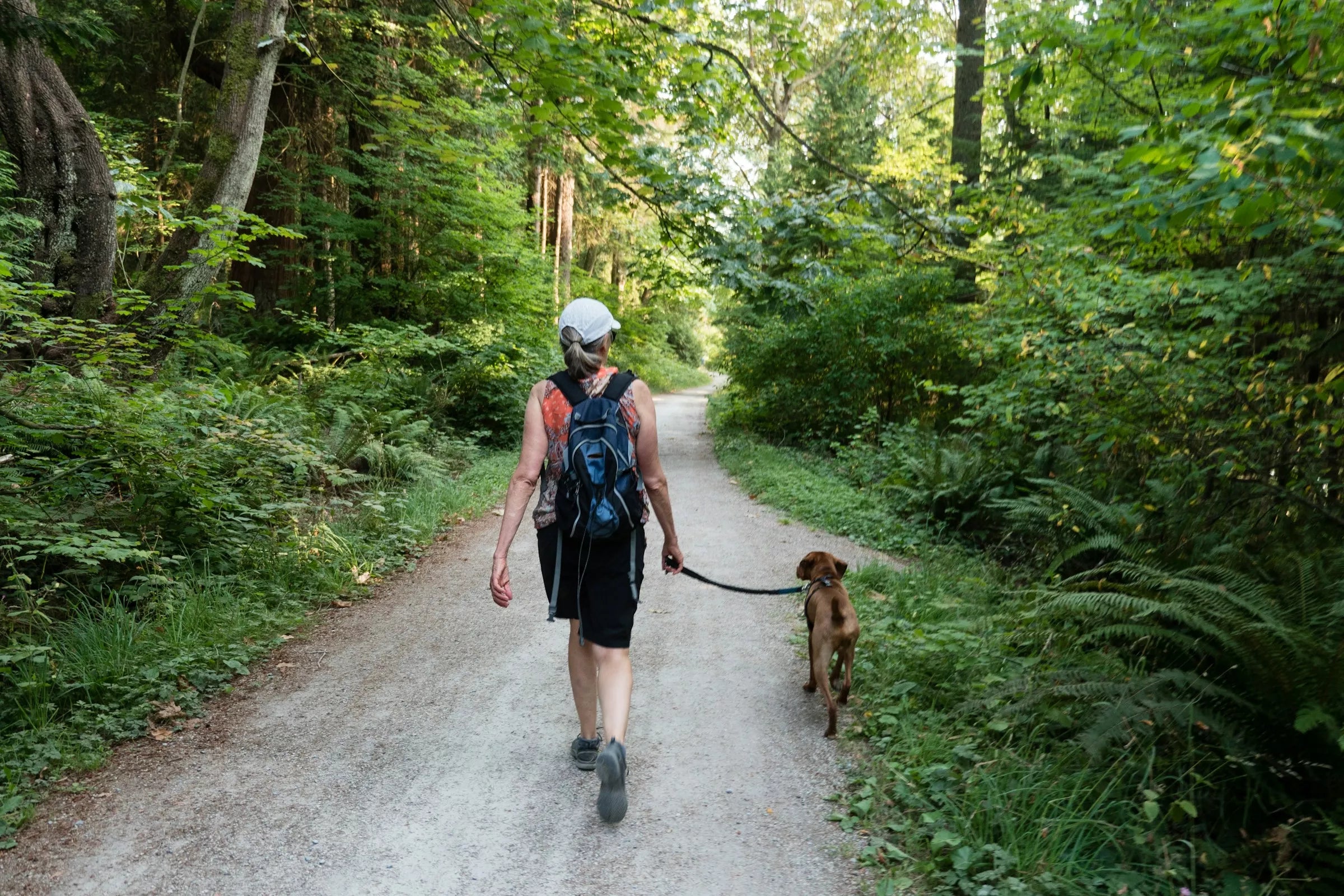
Soft surfaces such as grass and woodland trails are often easier on aging joints than hard pavement.
Read: Best Walking Surfaces for Dogs
Do Large Breeds Have More Trouble With Stairs?
Generally, yes.
Larger breeds are more prone to conditions such as:
- Hip dysplasia
- Arthritis
- Elbow dysplasia
- Cruciate ligament disease
Breeds commonly affected include:
Monitoring mobility becomes increasingly important as these dogs age.
Related Guides
- Signs of Joint Pain in Dogs
- Can Pulling Damage a Dog's Shoulders?
- Best Walking Surfaces for Dogs
- Why Short Walks Can Be Better Than Long Ones
- Dog Weight Chart
- Dog Height Chart
Conclusion
Stairs are not automatically bad for senior dogs.
Many older dogs continue using them comfortably for years.
The important thing is paying attention to what your dog is telling you.
Hesitation, slipping, stiffness, or avoidance may indicate that stairs are becoming uncomfortable.
By making simple adjustments and maintaining regular exercise, many dogs can continue enjoying active, happy lives well into their senior years.
FAQs
Should senior dogs avoid stairs?
Not necessarily. Many senior dogs can safely use stairs if they remain comfortable and confident.
Are stairs bad for dogs with arthritis?
Dogs with severe arthritis often benefit from reducing stair use, while those with mild arthritis may still manage stairs well.
Why does my old dog suddenly refuse to use stairs?
Sudden reluctance can indicate pain, weakness, arthritis, injury, or neurological problems and should be investigated by a veterinarian.
Can stairs make arthritis worse?
Repeated strain on painful joints may aggravate discomfort in some dogs, particularly those with advanced arthritis.
What is the best alternative to stairs for older dogs?
Ramps, non-slip flooring, and keeping essential areas on one level are often excellent alternatives.
Are short walks better for senior dogs?
Yes. Multiple shorter walks are often easier on aging joints and can help maintain strength and mobility.


Share:
Best Walking Surfaces for Dogs (And Which Ones to Avoid)
What Temperature Is Too Hot for Dogs? (Dog Weather Safety Guide)