


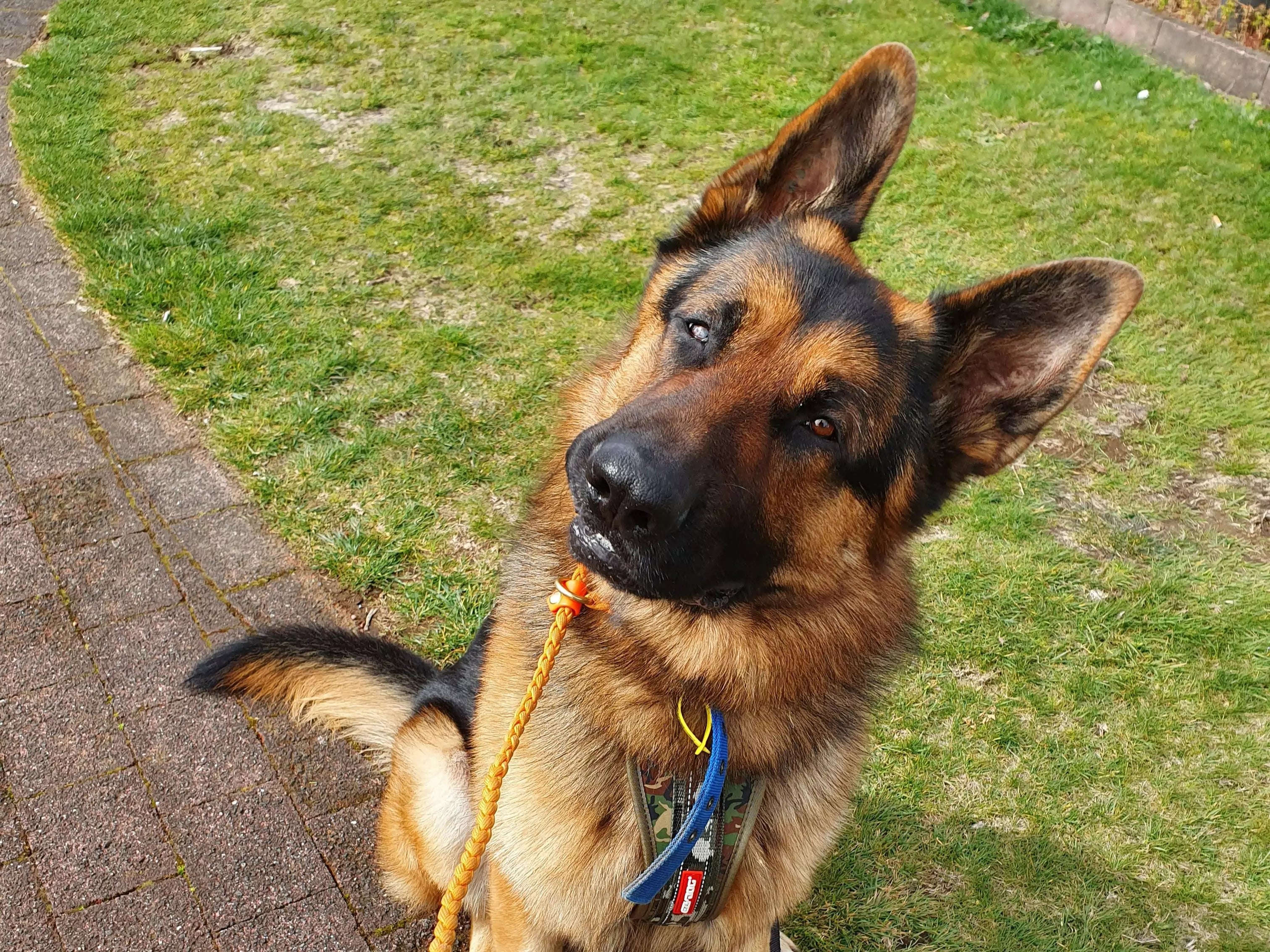
Why Do Dogs Tilt Their Heads?
Few dog behaviours are as instantly recognisable—or as adorable—as the classic head tilt.
You say "Walk?" or "Dinner?" and suddenly your dog's head tips to one side as if they're hanging on every word.
But are they actually trying to understand you, or is something else happening?
In most cases, a dog tilting their head is completely normal and often shows they're paying close attention. However, a persistent or sudden head tilt can occasionally indicate an underlying medical problem.
Quick Answer
Dogs tilt their heads to hear sounds more clearly, better understand human speech, read facial expressions, improve their view of your face, or because they've learned it earns positive attention. Occasional head tilting is completely normal, but a constant head tilt or one accompanied by balance problems should always be checked by a veterinarian.
Jump to Section
- What different head tilts mean
- 1. They're listening carefully
- 2. They're trying to understand your words
- 3. They're reading your facial expressions
- 4. They may be improving their view
- 5. They're processing new information
- 6. They've learned it gets attention
- 7. Some breeds do it more often
- 8. Sometimes it can signal a medical issue
- Normal vs when to worry
- FAQs
What Does It Mean When a Dog Tilts Their Head?
| Situation | Most Likely Meaning |
|---|---|
| You say "Walk?" | Recognising a familiar word. |
| You use an excited voice | Paying close attention to your tone. |
| During training | Processing information and expecting a cue. |
| Looking at a new object | Trying to understand something unfamiliar. |
| While listening to a sound | Pinpointing where the sound is coming from. |
| Constantly tilting one way | May require veterinary attention. |
1. They're Listening More Carefully

Dogs rely heavily on their hearing, and tilting their head may help them identify exactly where a sound is coming from.
Although dogs already have exceptional hearing, adjusting their head position can sometimes help them interpret unfamiliar noises or focus on particular sounds.
This is especially common when you speak in an unusual tone or say something they weren't expecting.
2. They're Trying to Understand Your Words
Dogs don't understand language in the same way humans do, but they can learn to recognise many words through repetition and association.
When you say words like "walk", "treat", "park" or your dog's favourite toy, a head tilt may simply mean they're concentrating on what you've just said.
Some exceptionally intelligent dogs have even demonstrated the ability to learn the names of dozens—or hundreds—of different objects.
Discover 100 words dogs commonly understand.
3. They're Reading Your Facial Expressions

Dogs pay surprisingly close attention to human faces.
They don't just listen—they also watch your eyes, mouth, posture and body language to understand what you're communicating.
A slight head tilt may help them gather even more information from your expression.
Learn how dogs recognise familiar faces.
4. Their Muzzle Might Be Blocking Their View
One interesting theory suggests that dogs with longer noses may tilt their heads simply to improve their line of sight.
By tilting their head, they may be able to see more of your face around their muzzle, making it easier to read your expressions.
While researchers continue to study this idea, it's considered a plausible explanation—particularly for long-snouted breeds such as Labradors, Golden Retrievers and German Shepherds.
5. They're Processing New Information
During training sessions, many dogs tilt their heads while thinking through what you've asked them to do.
It's similar to how people sometimes pause or lean forward while concentrating.
This behaviour often appears when learning new commands, solving puzzles or encountering something unfamiliar.
Did You Know?
Researchers studying so-called "Gifted Word Learner" dogs found that many consistently tilted their heads when hearing the names of toys they recognised.
This suggests head tilting may sometimes be linked to processing meaningful words rather than simply hearing sounds.
6. They've Learned It Gets Your Attention
Let's be honest—it's incredibly cute.
Most owners instinctively smile, laugh, praise or even reward their dog when they tilt their head.
Dogs quickly learn which behaviours earn positive reactions, so some may repeat the behaviour simply because it works.
7. Some Breeds Tilt Their Heads More Often
Although any dog can tilt their head, some breeds appear to do it more frequently.
| Breed | Likelihood of Head Tilting |
|---|---|
| Border Collie | ★★★★★ |
| Labrador Retriever | ★★★★★ |
| Golden Retriever | ★★★★★ |
| Cocker Spaniel | ★★★★☆ |
| German Shepherd | ★★★★☆ |
| French Bulldog | ★★★☆☆ |
Individual personality often matters more than breed, but highly social and trainable dogs frequently display this behaviour.
8. Sometimes It Can Signal a Medical Problem

Most head tilts are harmless.
However, if your dog suddenly develops a constant head tilt that doesn't disappear, it could indicate an underlying health issue.
Possible causes include:
- Ear infections.
- Vestibular disease.
- Neurological disorders.
- Inner ear problems.
- Head trauma.
If your dog also loses balance, walks in circles, vomits or shows rapid eye movements, seek veterinary advice promptly.
Normal Head Tilt vs When to Contact Your Vet
| Usually Normal | May Need Veterinary Attention |
|---|---|
| Only happens during conversation. | Constantly tilting one direction. |
| Occurs during training. | Loss of balance. |
| Returns to normal immediately. | Rapid eye movements. |
| Dog otherwise appears healthy. | Vomiting or stumbling. |
| Triggered by exciting words. | Sudden unexplained onset. |
Encouraging Your Dog's Curiosity
Head tilting often reflects an engaged, curious dog that's paying attention to the world around them.
Regular training, enrichment games and enjoyable walks all help keep your dog's mind active.
A comfortable, well-fitted Y-shaped harness allows dogs to move naturally while exploring new environments and learning through scent, sound and observation.
Browse comfortable dog harnesses.
Need help finding the right fit?
Conclusion
When your dog tilts their head, they're usually doing exactly what it looks like—they're paying close attention.
Whether they're listening carefully, trying to understand your words, reading your facial expressions or simply hoping for a treat, the behaviour is usually a wonderful sign of curiosity and engagement.
As always, if the head tilt becomes constant or is accompanied by other unusual symptoms, it's best to seek veterinary advice to rule out any medical problems.
FAQs
Why does my dog tilt their head when I talk?
Dogs often tilt their heads because they're listening carefully, recognising familiar words and watching your facial expressions.
Is head tilting a sign that my dog understands me?
It can be. Many dogs tilt their heads when processing familiar words or commands, although researchers believe hearing and visual cues also contribute.
Do puppies tilt their heads more than adult dogs?
Puppies often appear to tilt their heads frequently because they're constantly learning about their environment and the sounds around them.
Should I worry if my dog suddenly starts tilting their head?
If the head tilt is constant, sudden or accompanied by balance problems, vomiting or unusual eye movements, contact your veterinarian promptly.
Which dog breeds tilt their heads the most?
Highly trainable and social breeds such as Border Collies, Labrador Retrievers and Golden Retrievers are often observed tilting their heads frequently, although any breed can do it.
Can dogs learn that head tilting gets attention?
Yes. Dogs quickly learn which behaviours earn praise, smiles or treats, so some may tilt their head because they've discovered people find it adorable.


Share:
Why Does My Dog Sleep Touching Me? (7 Most Common Reasons)
Dog Harness vs Collar for Large Dogs: Which Is Better?